
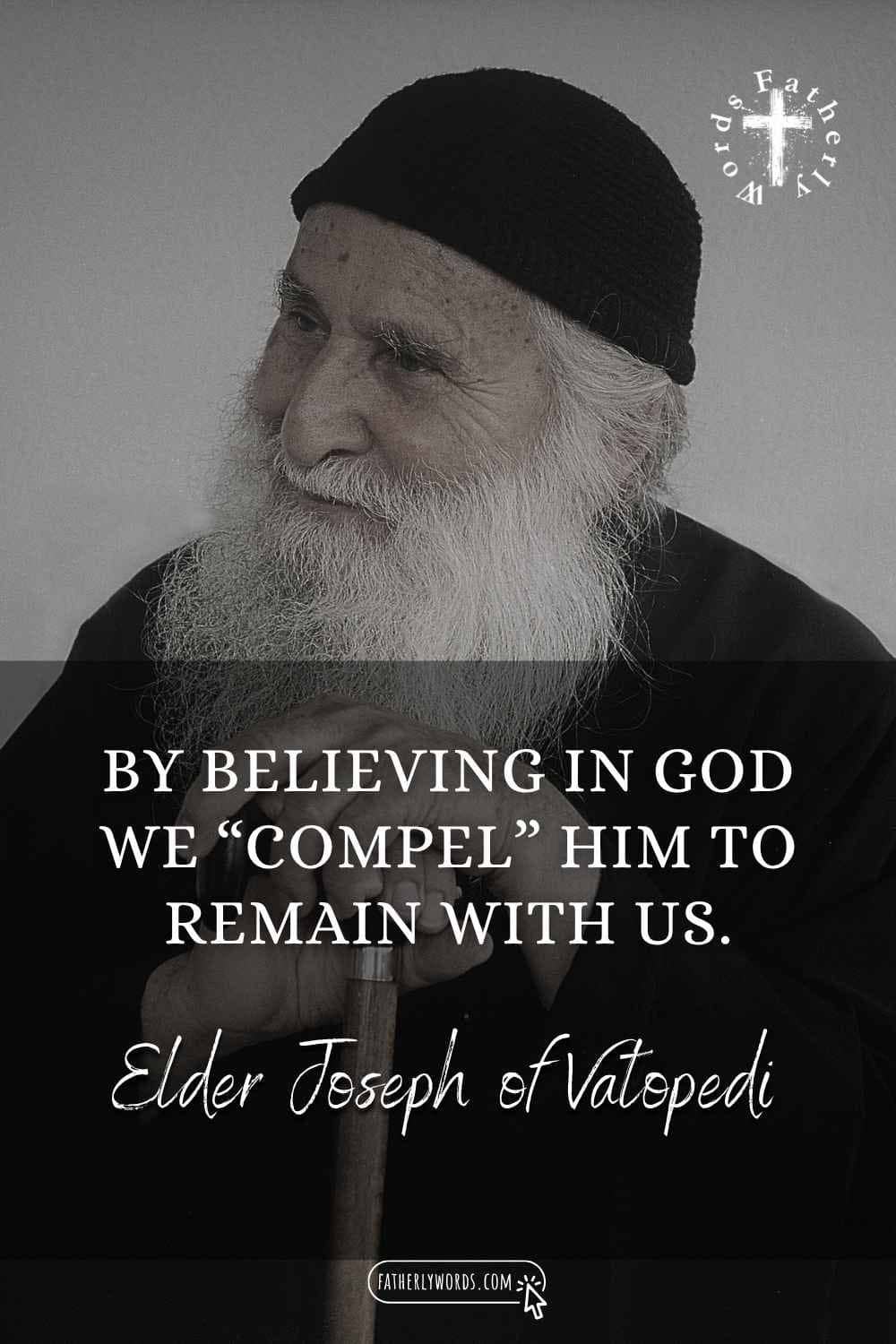
The history of Orthodox Christianity is a living tapestry of holiness, and in our contemporary era, few figures embody the depth of faith as profoundly as Elder Joseph of Vatopedi.
Known as one of the primary spiritual heirs to the great Saint Joseph the Hesychast, Elder Joseph’s life was a testament to the transformative power of monastic obedience, noetic prayer, and the unyielding pursuit of Divine Grace.
His journey from a premature birth in Cyprus to becoming the spiritual father of the Holy Monastery of Vatopedi on Mount Athos offers a roadmap for any soul seeking the authentic path of Orthodox Christianity.
The Early Life and Divine Calling of Socrates
Elder Joseph, born Socrates, entered the world under circumstances that immediately signaled a life set apart for God. He was born on July 1, 1921, in the village of Drousia, Paphos, on the island of Cyprus.
His birth occurred at the Monastery of Agioi Anargyroi in Giolou, where his mother, Eugenia, had gone to pray while seven months pregnant.
Born prematurely, the infant was initially thought to be dead by his mother, yet by the grace of God, he survived. This birth on the feast day of the Holy Unmercenaries (Agioi Anargyroi) established a lifelong spiritual connection with these saints, who would repeatedly intervene in his life.
In 1936, answering a divine call, Socrates entered the Stavrovouni Monastery with his parents’ blessing. It was here that he was tonsured a Rasophore monk with the name Sophronios.
He spent a formative decade at Stavrovouni before the spiritual guidance of Elder Cyprian led him to the “Garden of the Virgin Mary”—Mount Athos.
The Crucible of Obedience Under Saint Joseph the Hesychast
The defining chapter of Elder Joseph’s spiritual formation began in 1947 when he encountered the legendary Elder Joseph the Hesychast at the Skete of Saint Anne.
Recognizing the profound holiness and Orthodox Christianity radiating from the Great Elder, Sophronios begged to become his disciple. Although initially hesitant, the Elder accepted him after receiving a divine “information” or inner spiritual confirmation.
On Lazarus Saturday, April 11, 1948, at the hut of the Honorable Forerunner in Little Saint Anne, Sophronios received the Great and Angelic Schema and was renamed Joseph.
The naming was itself an act of humility; while some suggested other names to avoid “naming the disciple after the master,” the Elder used a lot (kleros) to decide, and the name Joseph was chosen by divine providence.
Under Saint Joseph the Hesychast, the younger Joseph lived a life of extreme austerity and “blind” obedience. He faced:
- Harsh climatic conditions and physical deprivation.
- A rigorous prayer rule centered on the Jesus Prayer.
- The strict spiritual discipline of a master who sought to crush the ego to make room for the Holy Spirit.
His master described him in letters as “full of Grace” and a “worker of obedience“.
This foundation of faith allowed him to endure decades of ascetic labor, building huts with his own hands and living in various sketes and cells, including Nea Skete and Kapsala.
The Spiritual Bond Between Elder Joseph and Elder Ephraim of Arizona
Within this sacred brotherhood, Elder Joseph shared a profound spiritual connection with his spiritual brother, Elder Ephraim (the former Abbot of Philotheou and later of Arizona).
As fellow disciples of Saint Joseph the Hesychast, they lived together in the same harsh conditions of the Skete of Saint Anne, bound by a common commitment to Orthodox Christianity and faith.
Their lives remained geographically and spiritually linked for decades; when Elder Joseph moved to the Hut of the Annunciation in 1967, he was actually succeeding Elder Ephraim, who had just departed that specific cell with his own group to move to Provata.
This deep fraternal bond was anchored by their shared “paternity” under the same Saint, ensuring that the authentic hesychastic tradition would be preserved and eventually spread across the world by both men.
Miraculous Signs and the Testimony of Holiness
The life of Elder Joseph of Vatopedi was marked by clear signs of sanctity that confirm the truth of Orthodox Christianity. One of the most significant miracles occurred during a period of severe illness.
The Healing of the Incurable Ulcer
Elder Joseph suffered from advanced ulcers, experiencing frequent hemorrhages. Medical doctors insisted that surgery was the only option, as no diet or medicine had provided relief for over two years.
However, his fellow ascetic, Father Theophylaktos, received a vision of Saint Panteleimon in the church. The Saint commanded that Joseph should not undergo surgery but should instead trust in the providence of the Virgin Mary.
Following this command, Joseph was instantly and completely healed; later X-rays showed only a small scar where the life-threatening wound had been.
The Smile from Eternity
Perhaps the most famous miracle associated with Elder Joseph occurred at the moment of his repose on July 1, 2009—the same day as his birth. At the time of his death, his mouth remained slightly open, and as rigor mortis set in, the monks were unable to close it.
However, an hour and a half after his passing, during the preparation of his body, the Elder’s face miraculously transformed. He did not just “settle”; he formed a distinct, joyful smile that remained fixed.
This “smile from eternity” was witnessed by many and photographed, serving as a powerful testament to the victory over death found in faith.
Spiritual Teachings and the Wisdom of the Heart
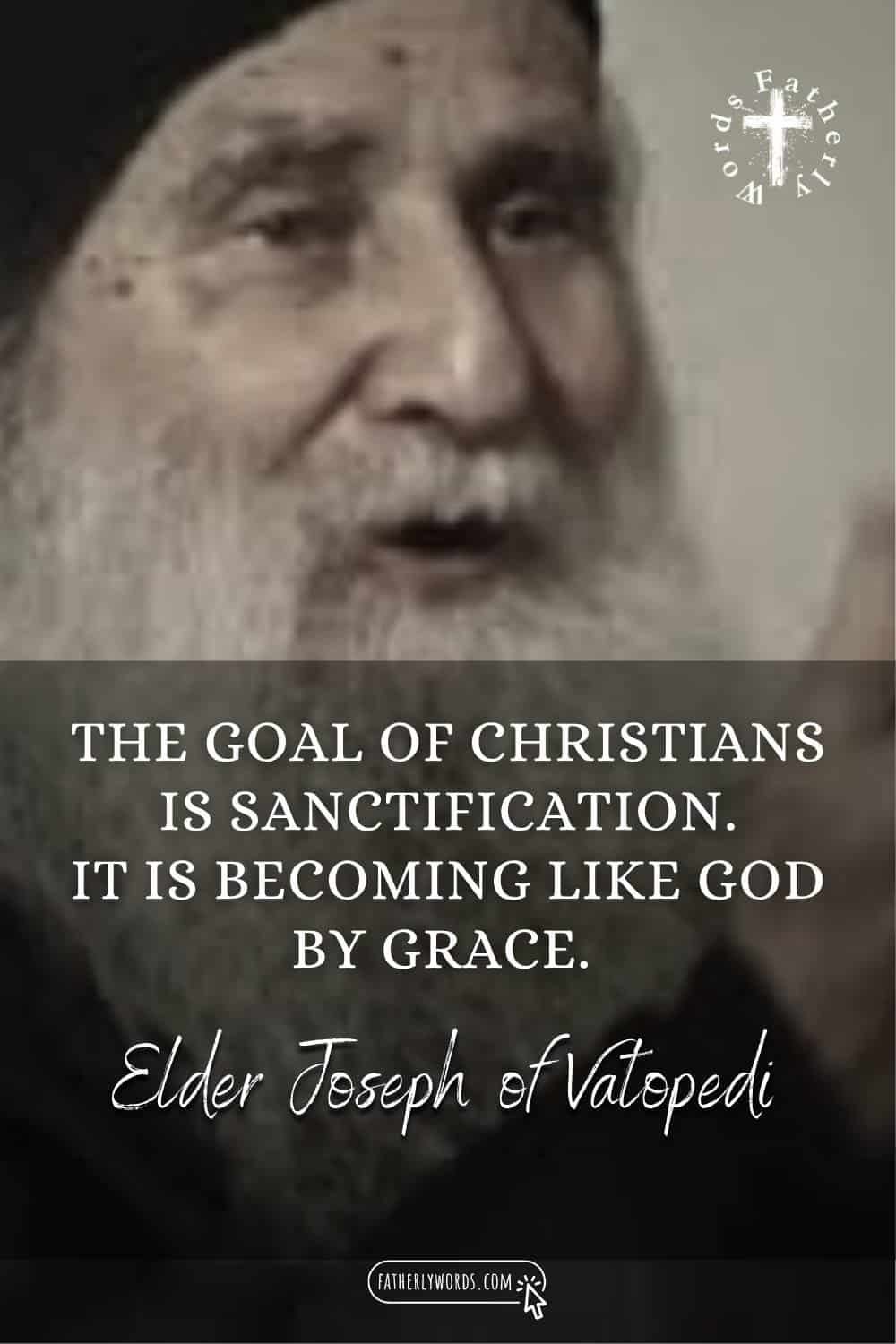
Despite having no formal worldly education—he did not even possess a primary school diploma—Elder Joseph became a vessel of “Divine Wisdom”. He authored sixteen books that serve as essential guides for modern seekers of Orthodox Christianity.
His teachings focused on:
- The Mystery of Obedience: He taught that obedience is the shortest path to humility and the acquisition of the Holy Spirit.
- The Value of Trials: He viewed illness and slander not as punishments, but as “visitations of God” that refine the soul.
The Restoration of the Holy Monastery of Vatopedi
In 1987, at the invitation of the elders of the Monastery of Vatopedi, Elder Joseph and his brotherhood moved to the historic monastery to transition it from an idiorrhythmic to a cenobitic (communal) way of life.
In 1990, the monastery was officially declared a cenobium, with his disciple, Archimandrite Ephraim, elected as Abbot.
The Holy Monastery of Vatopedi, located on the northern side of Mount Athos, is one of the oldest and most significant monasteries in the Orthodox world. It is renowned for its vast tradition, housing the Girdle of the Virgin Mary and seven miracle-working icons.
Under Elder Joseph’s spiritual fatherhood, the monastery saw a massive spiritual and physical reconstruction, becoming a global center for Orthodox Christianity and faith.
Veneration
Elder Joseph is celebrated by the Orthodox Christian Church as a holy figure of contemporary Athonite monasticism. He is particularly commemorated on July 1, the date of both his birth and his repose.
His sacred relics are kept at the Holy Monastery of Vatopedi, where pilgrims from across the globe come to worship and seek his intercession.
