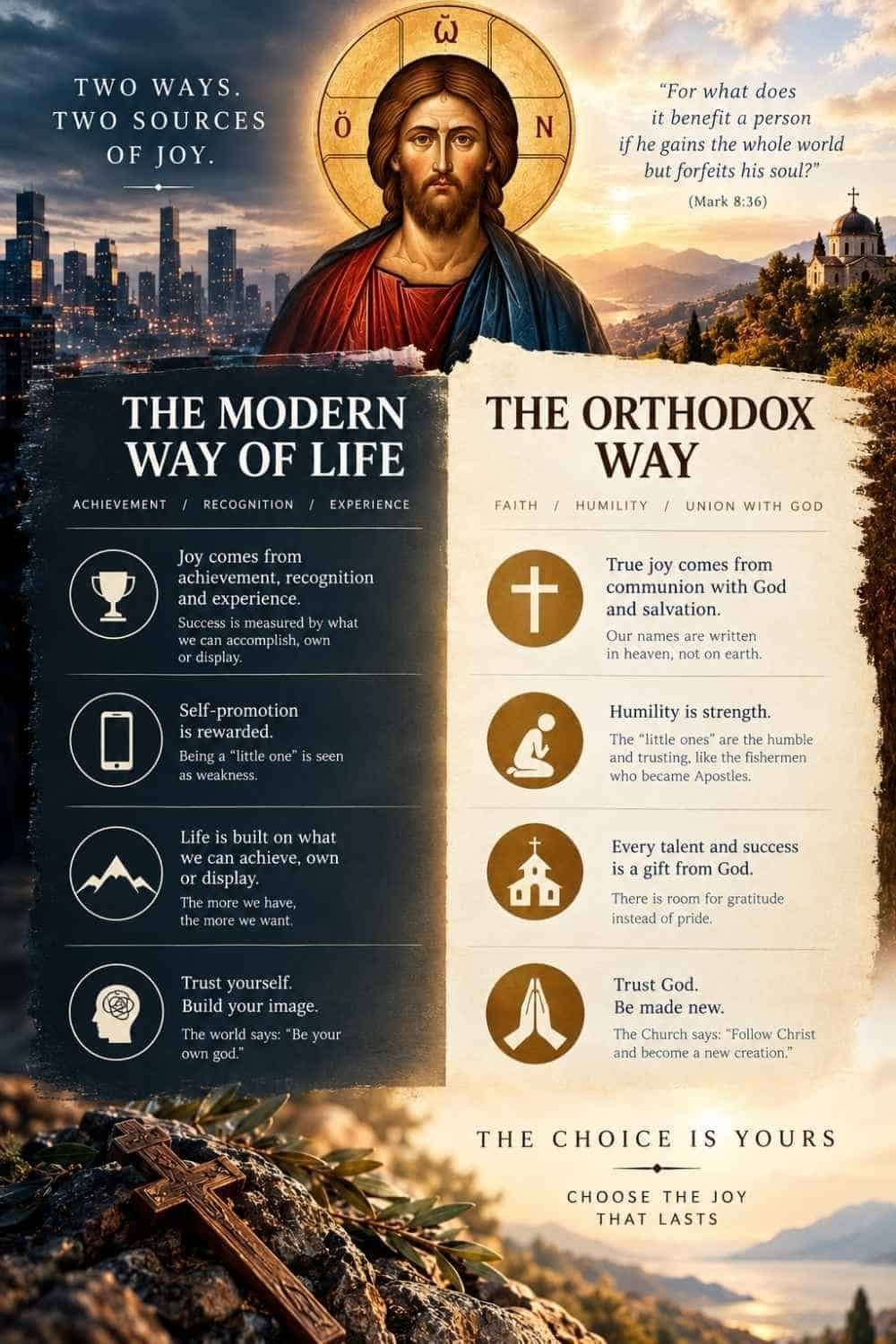
What does Luke 10:16–21 mean? In this Gospel reading, the Lord tells the Seventy Apostles not to rejoice because demons obey them, but to rejoice because their names are written in heaven.
True spiritual joy does not come from power, gifts, or miracles. It comes from communion with God and from the salvation He freely offers.
Picture the moment. The Seventy have just returned from their first mission. They have healed the sick, preached the Kingdom, and watched demons flee at the name of Jesus. Their hearts are overflowing. And then the Lord gently lifts their eyes higher than any miracle they have ever seen.
This short commentary on the Gospel reading walks through every verse of Luke 10:16–21. It explains why the Church places this passage on the feast of St. Luke the Evangelist, uncovers the deeper meanings Orthodox Christians have treasured in it, and shows how to live it in your ordinary days.
Luke 10:16–21: The Full Gospel Reading
Here is the Gospel passage as it is read in the Church:
[16] He that heareth you, heareth me; and he that despiseth you, despiseth me; and he that despiseth me, despiseth him that sent me.
[17] And the seventy returned with joy, saying: Lord, the devils also are subject to us in thy name.
[18] And he said to them: I saw Satan like lightening falling from heaven.
[19] Behold, I have given you power to tread upon serpents and scorpions, and upon all the power of the enemy: and nothing shall hurt you.
[20] But yet rejoice not in this, that spirits are subject unto you; but rejoice in this, that your names are written in heaven.
[21] In that same hour, he rejoiced in the Holy Ghost, and said: I confess to thee, O Father, Lord of heaven and earth, because thou hast hidden these things from the wise and prudent, and hast revealed them to little ones. Yea, Father, for so it hath seemed good in thy sight.
Why the Church Reads Luke 10:16–21 on the Feast of St. Luke
Every year on October 18, the Orthodox Church honors the memory of the Apostle and Evangelist Luke, the faithful and tireless worker of the Gospel.
When the feast falls on a Sunday, this passage is read at the Divine Liturgy. The choice is not random. It fits the saint, the season, and the message all at once.
Who Was St. Luke the Evangelist?
St. Luke came from Antioch of Syria. He was a Greek by birth and a physician by profession.
St. Paul calls him “the beloved physician” in his letter to the Colossians, and near the end of his life Paul writes that “only Luke is with me.”
Luke wrote the Gospel that bears his name and the Acts of the Apostles. Church tradition also remembers him as an iconographer who painted the first icons of the Theotokos.
He became one of the closest co-workers of St. Paul in spreading the word of the Lord, traveling with him through many regions.
After Paul’s martyrdom, Luke continued to preach. He fell asleep in the Lord in Thebes of Boeotia, in his eighties, as a holy man.
Four Reasons This Reading Fits His Feast
- He was one of the Seventy. Luke is the only Evangelist who records the sending of the Seventy, and Church tradition numbers him among them. On his feast, the Church reads the very story in which he and his fellow workers received their mission.
- Luke is the Gospel of joy. From the angel’s “good tidings of great joy” at the Nativity to the joy in heaven over one sinner who repents, Luke keeps returning to rejoicing. Our passage tells us exactly where to place our joy.
- It is a feast of a name written in heaven. The Church does not celebrate saints because of their accomplishments. She celebrates them because their names are written in the Book of Life. Verse 20 is the whole meaning of a saint’s feast day.
- It matches his life. Luke took up the work of the Gospel with enthusiasm, and it cost him labor, persistence, and a sacrificial spirit. Yet he never put himself forward. He does not even name himself in his own Gospel. He is the living picture of a “little one” who credits everything to God.
The Seventy Apostles: Who They Were and Why They Were Sent
Just before our passage, in Luke 10:1, the Lord appoints seventy others and sends them out two by two, ahead of Him, into every town He was about to visit.
They carry a simple message: the Kingdom of God has come near.
They are told to bring peace, to heal, and to trust God for everything.
The number is not accidental. Moses once took seventy elders up the mountain when the Old Covenant was sealed with blood, and there they saw God and shared a sacred meal (Exodus 24).
The Church sees a beautiful echo here. The Old Covenant was sealed with the blood of sacrifices. The New Covenant was sealed at the Mystical Supper and on the Cross, with the precious Blood of the Son of God. The Seventy are the first fruits of a new people sent to proclaim it.
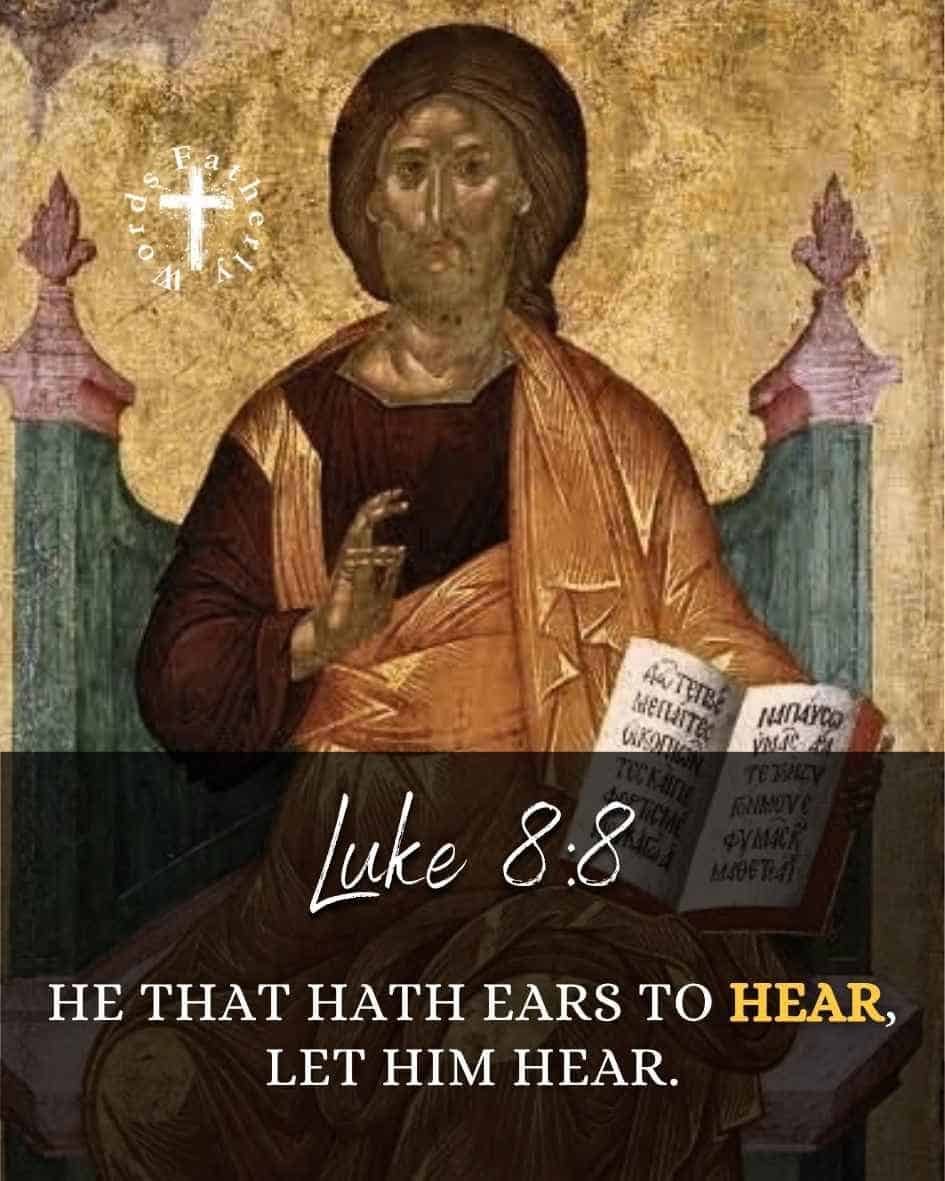
“He That Heareth You, Heareth Me”: Why Hearing the Church Matters (Verse 16)
The passage opens with a chain of authority, and it is a chain of love. The Father sends the Son. The Son sends His Apostles. Whoever receives their message receives Christ, and whoever receives Christ receives the Father. The reverse is just as serious: to despise the messengers is to despise the One who sent them.
In the Bible, “hearing” means more than listening. It means receiving the word and obeying it.
Every act of disobedience or insult directed at the Lord’s messengers touches Him directly. This is why the Orthodox Church has always treasured the teaching handed down from the Apostles and continued through the bishops and the faithful life of the Church. The authority is not about human power. It is about faithfulness to Christ, who is the One truly speaking through His Church.
For us today, this verse is a quiet invitation. We are not meant to build our own private version of the faith. We are meant to listen, to be taught, and to be part of the body of Christ.
“I Saw Satan Like Lightning Falling From Heaven”: What Does Luke 10:18 Mean? (Verses 17-18)
The Seventy return “with joy,” and their first words are about demons: “Lord, the devils also are subject to us in thy name.”
They are amazed. Notice the word “also.” They had expected to heal the sick. The submission of demons was a bonus beyond their hopes.
The Lord’s answer is one of the most mysterious sentences in the Gospels: “I saw Satan like lightening falling from heaven.” What does it mean?
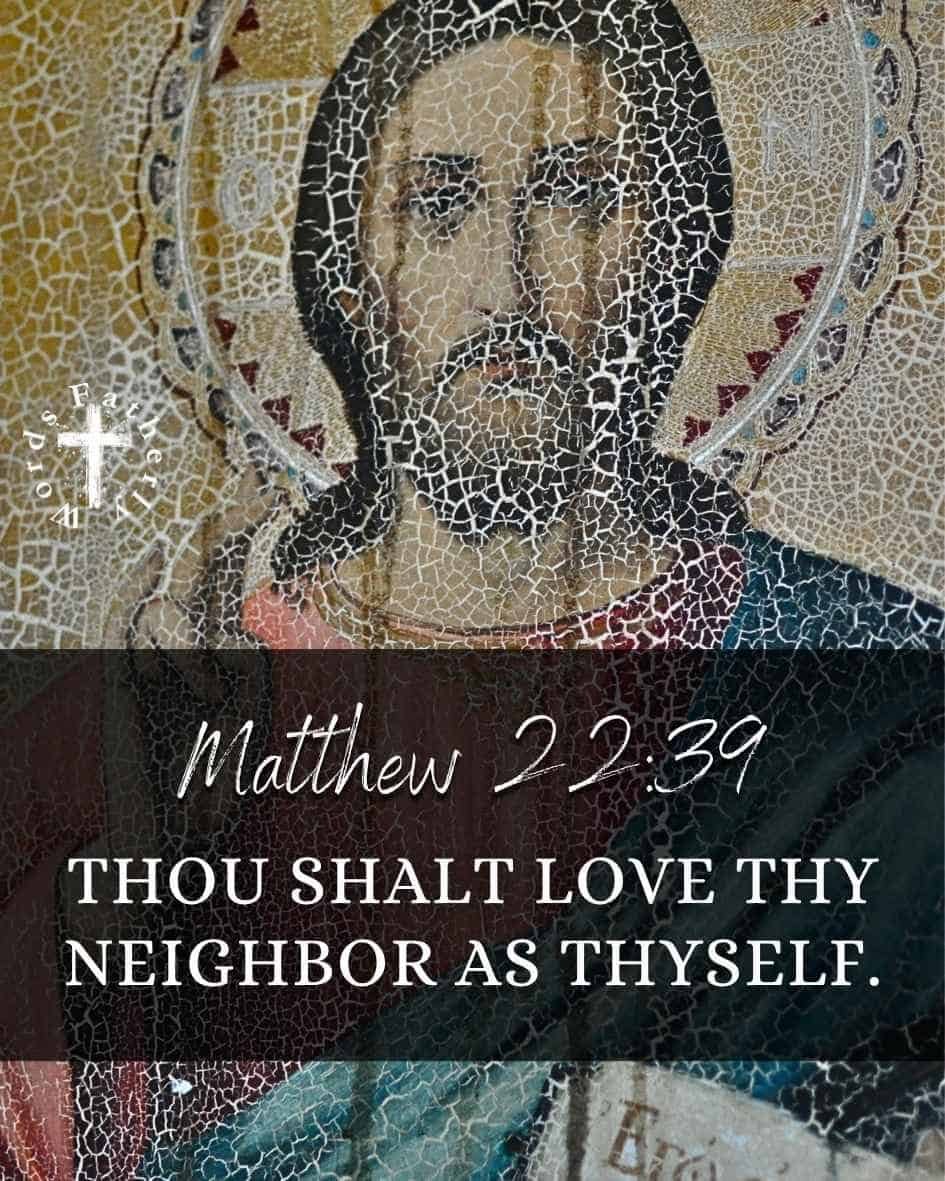
The Eternal Christ Saw the Fall
The Church teaches that Satan was created good as an angel but fell through pride.
By declaring, “I saw Satan fall like lightning from heaven” (Luke 10:18), the Lord reveals His divine authority over the powers of evil.
In the light of His eternal divinity, these words may also be understood as pointing to the Son’s existence before all ages and His supremacy over Satan. This brief declaration thus offers a glimpse of Christ’s divine identity.
The Defeat Happening Right Now
The Lord also speaks of the present. From the moment He began His work, and especially as the Seventy went out in His name, the kingdom of the evil one has been losing its grip.
Every healing, every freed soul, every proclamation of the Gospel is a blow to Satan’s rule. The picture of lightning fits: his fall is sudden, visible, and total. Lightning is bright and dazzling, but it is gone in an instant.
Satan also likes to disguise himself as an angel of light, but his brightness is empty and it does not last.
A Gentle Warning Hidden in the Words
Holy Fathers such as St. Cyril of Alexandria and St. Theophylact of Ochrid point out a tender warning here. Why does the Lord remind them that Satan fell? Because the Seventy are rejoicing in their power, and the easiest door for a person to fall through is pride.
Satan fell from the heights because of pride.
The Lord is saying, in effect: do not let your success lift your heart, or you will meet the same fate.
St. John Climacus teaches the same truth when he describes pride as the sickness that can cast down even those who have climbed high.
An Important Orthodox Clarification
Satan is not the equal and opposite of God. He is a fallen creature, and a defeated one. Orthodox Christians do not live in fear of the devil. We live in awe of Christ, who already holds the victory.
Power to Tread Upon Serpents and Scorpions: What Did Christ Give the Seventy? (Verse 19)
“Behold, I have given you power to tread upon serpents and scorpions, and upon all the power of the enemy: and nothing shall hurt you.” The Lord now gives them even more than they had received when He first sent them out.
The Church has always understood “serpents and scorpions” as the demons and every tool the enemy uses to poison human souls. Like snakes and scorpions, they strike quietly and by surprise, spreading venom meant to destroy.
The language also recalls the very first promise of salvation in Genesis, when God told the serpent that the seed of the woman would crush his head. It recalls the Psalm that says the righteous will tread upon the asp and the basilisk. In Christ, the promise comes true, and His disciples share in His victory.
Does “Nothing Shall Hurt You” Mean No Suffering?
No. Most of the Apostles ended their lives as martyrs.
The promise is not that a Christian will never face pain, but that nothing the enemy devises can finally separate us from Christ or destroy the soul that clings to Him. No scheme of the evil one will succeed against the Church’s mission.
This is the same hope St. Paul expresses when he says that neither death nor life nor any other creature can separate us from the love of God.
For more than fourteen centuries, one icon has proclaimed this very truth. Since the 6th century, the Christ Pantocrator of Saint Catherine’s Monastery, one of the oldest Byzantine religious icons in the world, has been guarded by humble monks at the foot of Mount Sinai, surviving the upheavals of history as a witness that Christ is Lord over every enemy.
You can now bring that same sacred image into your home with our Christ Pantocrator canvas, a truly original and meaningful gift for faithful Christians that makes a lasting difference, and you can use code WELCOME-10 to receive 10% off your order.

Why True Spiritual Joy Surpasses Even Miracles: Luke 10:20 Explained (Verse 20)
Here is the heart of the passage. “But yet rejoice not in this, that spirits are subject unto you; but rejoice in this, that your names are written in heaven.”
The Lord does not say that the power was bad. He says it was not the right place to rest their joy.
A Gift Is Not an Achievement
The authority over demons was not the Apostles’ own accomplishment. It was grace and a gift from the Lord. Rejoicing in it as though they had earned it would invite the pride that destroyed Satan himself. A gift received should lead to thanksgiving, not self-admiration.
Why Miracles Are Not the Goal
The Gospel makes this very clear elsewhere. The Lord says that on the last day many will say, “Lord, Lord, did we not cast out demons in your name?” and He will answer that He never knew them.
St. Paul says that even if he had faith to move mountains but had no love, he would be nothing.
Miracles can be real, and God does work them. But they are signs pointing toward Someone, not the destination. A person can work wonders and still lose his own soul. A person can work none and still be a saint.
The Fathers also warn us not to chase visions, signs, or spiritual experiences. The desire for extraordinary things is often a quiet form of pride.
The safe road is the humble one: repentance, prayer, the Sacraments, and love.
Be inspired by the extraordinary life of Saint Mary of Egypt, whose journey from a life of sin to profound holiness shows that no one is beyond the reach of God’s mercy.
What Does “Your Names Are Written in Heaven” Mean?
To have your name written in heaven means to belong to God’s family and to have a place in His Kingdom.
Scripture speaks of this often: the Book of Life, the Church of the firstborn whose names are enrolled in heaven. It is the language of citizenship.
We are no longer strangers but members of the household of God, with a share in the blessings of the heavenly Kingdom.
Scripture also speaks of names being blotted out. This is why the Christian life is a life of continual repentance, prayer, and effort, never of careless confidence.
Salvation Is Union With God
Why does the Church place so much weight on keeping the commandments?
Because the commandments are not a burden placed on us from outside. They come from God’s perfect love for humanity, and they lead to salvation, which means union between a person and his Creator.
Life without God and without repentance cannot be borne for long, because we were made for Him. The Gospel itself is God’s invitation to humanity through Christ. Following it demands struggle and sacrifice, and the path of salvation is not an easy one. But this very path leads to the joy the Lord is describing.
Joy as a Fruit of the Holy Spirit
This is why Orthodox joy is different from a mood or a feeling. St. Paul lists joy among the fruits of the Holy Spirit. It grows quietly where Christ is present, in the soul that is repenting and loving.
St. Seraphim of Sarov said, “Acquire the Spirit of peace, and thousands around you will be saved.”
The joy of heaven is a gift the world can neither give nor take away.
He Rejoiced in the Holy Spirit: The Holy Trinity in Luke 10:21
“In that same hour, he rejoiced in the Holy Ghost, and said: I confess to thee, O Father…” In this single verse, the whole Holy Trinity is present. The Son prays to the Father in the Holy Spirit. Here the Lord Himself rejoices, and the Church sees something precious: the Son’s joy is the joy of perfect communion with the Father. This is the same joy He wants to share with us.
The Lord’s prayer is a prayer of thanksgiving and praise. The word translated “confess” here means to give thanks and to glorify. He is delighted that the Apostles’ zeal and devotion to the spreading of the Gospel pleases the Father.
Hidden From the Wise, Revealed to Little Ones: Orthodox Humility Explained (Verse 21)
“Thou hast hidden these things from the wise and prudent, and hast revealed them to little ones.” Is the Lord against education? Not at all.
St. Luke was a learned physician. St. Paul was highly educated. Many Fathers of the Church were brilliant scholars. The Lord is speaking about a certain kind of wisdom: the kind that trusts only itself.
The “wise and prudent” are those who think they are wise and need no help from God. Because they are full of themselves, there is no room for the truth. The “little ones” are the humble, the simple, and the trusting.
Fishermen and tax collectors became the Apostles because they were ready to listen. They looked small to the world, like children next to the great teachers of the age, but they received the most precious knowledge ever revealed.
Notice the last words: “Yea, Father, for so it hath seemed good in thy sight.” The Lord does not complain about how God reveals Himself. He accepts it with joy because the Father’s will is good and wise and just.
How to Apply Luke 10:16–21 in Your Daily Life
The Lord’s words are not only for the Seventy. They are practical for every Orthodox Christian. Here is how to live them.
1. Give God the Credit
Every talent, success, and good deed is a gift. When someone praises you, silently thank God. When you succeed, remember the Seventy. The Lord asks you to rejoice in the gift without claiming it as your own.
2. Check Where Your Joy Comes From
Ask yourself honestly: what makes me happiest? A promotion, applause, a spiritual high, or being close to Christ? Over time, ask God to move your joy toward the thing that cannot be taken away.
3. Pray Daily for Your Name in the Book of Life
Stay close to the means of salvation: regular confession, Holy Communion, prayer, and fasting.
Remember that your name is kept in heaven by your continual struggle, and that God’s mercy never runs out.
Anxiety is the quiet burden of the modern age, yet the Church has always known where to turn: certain Psalms of David and the prayers of St. Arsenios the Cappadocian have brought peace to troubled hearts for generations. Enter your email in the form below, and we will send you a free ebook that opens these treasures for you.
4. Listen to the Church
Attend the Divine Liturgy faithfully, listen to the Gospel, and be willing to be corrected. Ask your spiritual father for guidance in the things you do not understand. Verse 16 teaches that hearing the Church is a way of hearing Christ.
5. Guard Against Pride
When you notice self-satisfaction rising, say the Jesus Prayer: “Lord Jesus Christ, Son of God, have mercy on me, a sinner.” Remember that the angel of light fell because of pride, and he fell fast.
6. Face Spiritual Struggles With Confidence, Not Fear
You do not need to be curious about the demons or afraid of them. Use the weapons the Church gives you: prayer, the Sign of the Cross, the Sacraments, and the commandments. Christ has given power over the enemy to those who follow Him.
7. Become a “Little One”
Read the Gospel every day with a simple, trusting heart. Do not let learning, status, or opinions get in the way of what God wants to reveal. Like St. Luke, spend your life listening to the word of the Lord and keeping His commandments.
Frequently Asked Questions About Luke 10:16–21
What does “your names are written in heaven” mean?
It means you belong to God’s family and have a place in His Kingdom. In the Orthodox understanding, this is a gift of grace that we must keep through repentance, prayer, and a life lived in the commandments.
Who were the Seventy Apostles?
They were disciples appointed by Christ, in addition to the Twelve, and sent out two by two to proclaim the Kingdom of God. The Church remembers them as the Seventy Apostles, and tradition counts St. Luke among them.
Why did Jesus say “I saw Satan fall like lightning”?
The Lord reveals that He is the eternal Son who saw Satan’s fall through pride, and that Satan’s power is collapsing through the work of the Gospel. It is also a gentle warning against pride for the Seventy.
Why is Luke 10:16–21 read on October 18?
The Church reads this passage on the feast of St. Luke the Evangelist because he is the one who recorded the mission of the Seventy and, by tradition, was one of them. His life fits the passage’s message of humble, joyful service.
Does “nothing shall hurt you” mean Christians never suffer?
No. Many Apostles and saints suffered greatly. The promise is that nothing the enemy does can ultimately separate a faithful Christian from Christ or defeat the Church.
Rejoice That Your Name Is Written in Heaven
The Seventy came home delighted with what they could do. The Lord, in His tenderness, showed them what truly mattered: not what they could do for God, but what God had done for them. Their names were written in heaven. This is the joy that no demon, no failure, and no loss can touch.
In the same way, St. Luke spent his life laboring for the Gospel, and the Church remembers him not for his skills but because of the One he served. May we also rejoice in what is eternal, give thanks like little ones, and keep our hearts close to Christ.
Glory to God for all things.