
In a world obsessed with self-preservation, personal branding, and the accumulation of material wealth, the Gospel message of Jesus Christ comes not as a mild moral improvement, but as a radical existential revolution.
The Gospel passage appointed for the Sunday after the Holy Cross presents humanity with the ultimate choice: preserve the temporary ego and perish, or crucify the self-centered life for Christ and inherit eternal life.
This comprehensive Orthodox commentary explores the deep spiritual, ascetical, and Patristic dimensions of Mark 8:34–9:1. By examining why the Church fathers placed this reading immediately following the Feast of the Universal Exaltation of the Precious and Life-Giving Cross, we uncover the timeless path of self-denial, spiritual warfare, and deification.
The Gospel According to Mark 8:34–9:1 (Orthodox Gospel Reading)
Below is the authentic Gospel passage appointed by the Holy Orthodox Church for the Sunday after the Holy Cross.
[34] And calling the multitude together with his disciples, he said to them: If any man will follow me, let him deny himself, and take up his cross, and follow me.
[35] For whosoever will save his life, shall lose it: and whosoever shall lose his life for my sake and the gospel, shall save it.
[36] For what shall it profit a man, if he gain the whole world, and suffer the loss of his soul?
[37] Or what shall a man give in exchange for his soul?
[38] For he that shall be ashamed of me, and of my words, in this adulterous and sinful generation: the Son of man also will be ashamed of him, when he shall come in the glory of his Father with the holy angels.
[1] And he said to them: Amen I say to you, that there are some of them that stand here, who shall not taste death, till they see the kingdom of God coming in power.
Scripture Citation Note: Why Mark 8:34–9:1 and Not Mark 8:34–39?
When looking at Orthodox liturgical calendars, you will see this Gospel reading cited as Mark 8:34–9:1.
In older historical manuscripts or Vulgate-derived translations, the final verse was occasionally numbered as verse 39 of chapter 8. In standard modern Bible versification, chapter 8 ends at verse 38.
The Orthodox Lectionary includes Mark 9:1 because Christ’s promise about seeing the “Kingdom of God coming in power” directly completes His teaching on the Cross and foreshadows His Transfiguration.
Liturgical Context: Why Mark 8:34–9:1 Is Read on the Sunday After Holy Cross
The Orthodox Church, guided by the Holy Spirit through her liturgical calendar, never selects Gospel readings at random.
The Feast of the Universal Exaltation of the Precious and Life-Giving Cross is celebrated annually on September 14. On the Sunday immediately following this great feast, the Church places Mark 8:34–9:1 directly before the faithful to connect theological truth with personal spiritual labor.
On September 14, we venerate the Precious and Life-Giving Cross of Christ, glorifying Him who conquered death by death.
However, on the Sunday after Holy Cross, the Church turns her focus toward the practical, internal application of the Cross in the daily life of every believer.
It is not enough to admire the Cross from afar or wear it as an external ornament. We are called to take up our own personal cross and follow the footsteps of the Savior.
The Evangelist Mark records that Christ did not whisper these words in secret to a select few, but called the entire multitude together with His disciples.
This demonstrates that the call to carry the cross is not reserved exclusively for monastic ascetics or martyrs. It is the universal vocation of every baptized Christian who seeks salvation.
By placing this Gospel reading here, the Church reminds us that resurrection and glory are completely unattainable without voluntary crucifixion and self-denial.
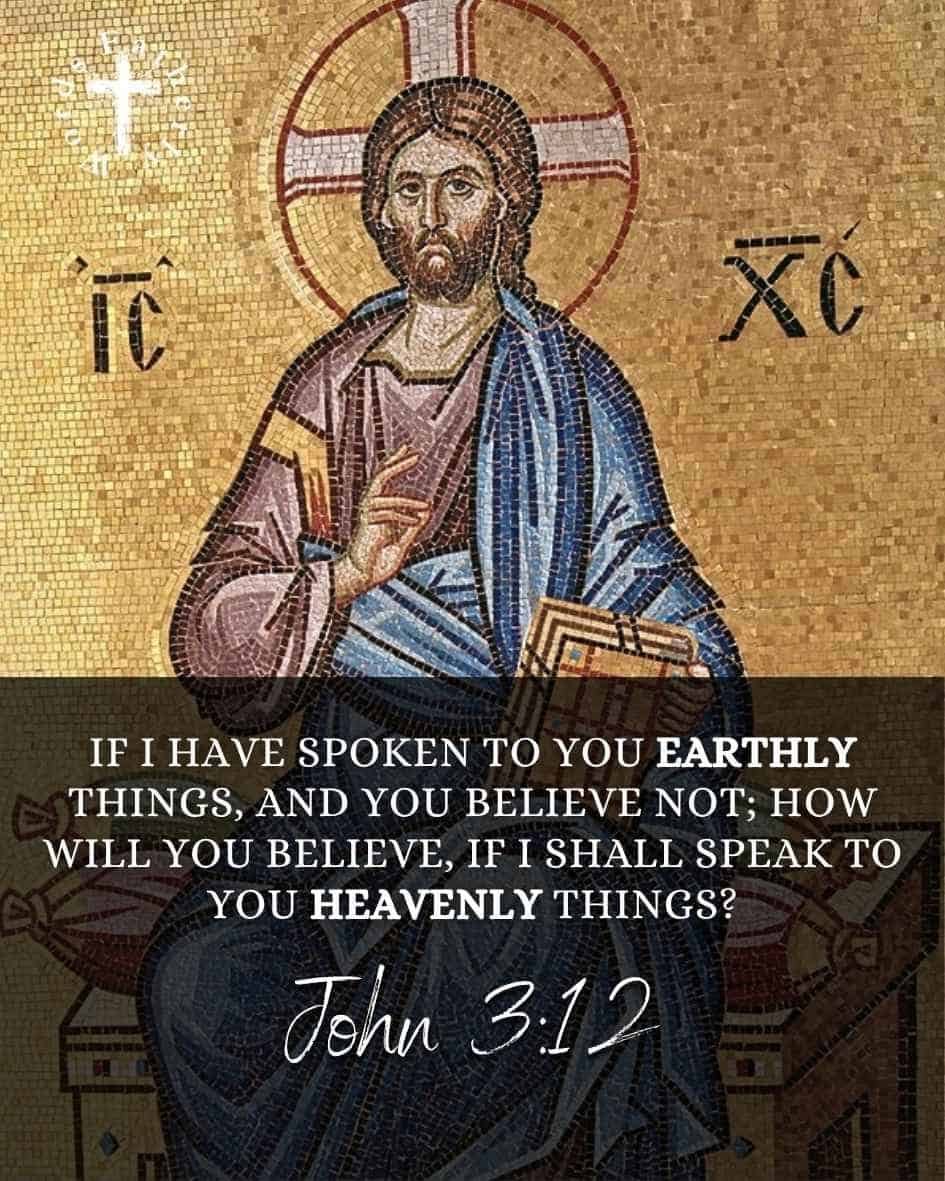
Commentary on Mark 8:34–9:1: Deep Orthodox Meanings and Interpretation
To understand the full depth of this passage, we must examine the text through the traditional, ascetical framework preserved by Orthodox tradition.
The Call to Self-Denial and Taking Up the Cross
Christ begins with a gentle yet unyielding invitation: “If any man will follow me, let him deny himself, and take up his cross, and follow me“.
Notice the absolute respect for human freedom. Christ does not compel anyone by force; He respects the free will with which He endowed humanity. Yet, the condition for following Him is absolute.
Self-denial does not mean the annihilation of human personality or self-hatred. Rather, it means the total rejection of our fallen, passionate, and sinful ego. Our worst enemy is not external to us; it is our own corrupt passions, selfish desires, and proud self-will.
To deny oneself is to dismantle the nervous collection of fears, prideful ambitions, and worldly cravings that we falsely mistake for our true identity.
Taking up the cross means willingly accepting the hardships, illnesses, betrayals, and spiritual trials that come our way, without complaint or despair.
The cross is our individual path of trial through which God purifies our hearts. While the cross may appear heavy to human reason, divine grace renders it light and joyful.
The Spiritual Paradox: Losing Life to Save It
In verse 35, Christ reveals the fundamental spiritual law of the heavenly kingdom: “For whosoever will save his life, shall lose it: and whosoever shall lose his life for my sake and the gospel, shall save it“.
This principle operates on an economy completely opposite to that of the fallen world. The world teaches us to hoard, protect, assert, and preserve the self at all costs.
Christ reveals that whoever attempts to secure his physical, earthly existence through selfishness ultimately destroys his eternal soul. Conversely, whoever freely surrenders his life, putting Christ and the Gospel above all earthly attachments, finds his true, resurrected life in God.
As early Christian commentators noted, this loss of life is accomplished not only through physical martyrdom, but through the daily, conscious death of our self-will.
Every time we choose humility over pride, forgiveness over vengeance, and fasting over indulgence, we participate in this mystery of losing our life for Christ’s sake.
The True Value of the Soul Versus the World
Verses 36 and 37 present humanity with a solemn weight: “For what shall it profit a man, if he gain the whole world, and suffer the loss of his soul? Or what shall a man give in exchange for his soul?“
Here, Christ sets the entire material cosmos on one side of a scale, and a single human soul on the other.
The soul far outweighs the entire universe because it was created in the image and likeness of God, designed for eternal communion with the Divine Trinity. All earthly empires, material riches, fame, and biological health are fleeting and will turn to dust in the grave.
Nothing that cannot pass through the boundary of death has genuine, lasting value. If a person acquires all the wealth, comfort, and praise that this world can offer, but loses his soul to spiritual death and separation from God, his life is an absolute tragedy.
The soul is so infinitely precious that nothing in the created universe can be offered as a ransom to purchase it back once it is lost.
Bold Witness Versus Human-Pleasing
In verse 38, Christ issues a stern warning against spiritual cowardice: “For he that shall be ashamed of me, and of my words, in this adulterous and sinful generation: the Son of man also will be ashamed of him, when he shall come in the glory of his Father with the holy angels“.
To be ashamed of Christ does not merely mean denying Him under physical persecution. It includes the subtle, everyday compromise of human-pleasing.
It is the double life wherein a person seeks to enjoy the comforts of faith in private while hiding his Orthodox conviction in public out of fear of social rejection, professional disadvantage, or ridicule.
Christ calls this world an “adulterous and sinful generation” because humanity has turned its love away from its Creator and given its affections to created things.
To seek approval from a world at war with God is a betrayal of our spiritual marriage to Christ.
When Christ returns in divine glory surrounded by His holy angels, He will acknowledge those who boldly confessed Him, and disown those who chose the fleeting praise of men over the eternal glory of God.
Seeing the Kingdom of God Coming in Power
The passage concludes with a glorious promise in Mark 9:1: “Amen I say to you, that there are some of them that stand here, who shall not taste death, till they see the kingdom of God coming in power“.
This verse refers directly to the divine events that followed shortly after Christ spoke these words, primarily His holy Transfiguration on Mount Tabor, His glorious Resurrection, and the outpouring of the Holy Spirit at Pentecost.
The Kingdom of God is not merely a future reality reserved for the end of time; it is a present spiritual power accessible right now within the Church.
Through the holy Mysteries of the Church, especially Confession and Holy Communion, through deep prayer and ascetical labor, the faithful believer experiences even in this earthly life the light, peace, and uncreated grace of the Kingdom of God.
The Path of Spiritual Healing: Purification, Illumination, and Deification
The teaching of Mark 8:34–9:1 provides the exact map for spiritual progress preserved within Orthodox ascetical theology. Salvation is not a legal transaction or a passive belief, but an active, organic process of healing that restores the divine image within us.
1. Purification
This is the stage of active spiritual struggle where the Christian, through self-denial and repentance, cleanses the heart from sinful passions. By taking up the cross, we cut off bad habits, curb self-will, and cleanse the mirror of the soul.
2. Illumination
As the heart is freed from dark passions, the Holy Spirit illuminates the mind and soul. The Christian gains spiritual discernment, begins to pray with pure attention, and beholds the deeper spiritual reality behind everyday events.
3. Deification
This is the ultimate goal of human existence: becoming a partaker of the divine nature by grace. In this state, the believer tastes the Kingdom of God coming in power, entering into intimate communion with God that begins in this life and continues into eternity.
Overcoming the Modern Trap of Materialism and Anxiety
Modern society demands that we dedicate every waking hour to material success, financial accumulation, and social status. We work long, exhausting hours to nourish and comfort our mortal bodies, while completely neglecting the eternal soul.
This disordered lifestyle creates overwhelming psychological stress, deep fear of loss, and spiritual burnout.
When we prioritize the body over the soul, we live in constant anxiety because material security can be destroyed in a single moment. True peace returns only when we reorder our lives, seeking first the Kingdom of God and trusting that our loving Father will care for our daily physical needs.
If you feel consumed by relentless worry, exhausted by modern burnout, and desperate for real spiritual stillness, you do not have to carry that weight alone.
The Orthodox Church has preserved time-tested spiritual medicine for inner turmoil, specifically rooted in ancient Psalms of David paired with targeted prayers of Saint Arsenios of Cappadocia.
Enter your email below to instantly receive our curated spiritual guide and begin restoring deep, Christ-centered peace to your soul today.
Frequently Asked Questions About Mark 8:34–9:1
What does it mean to take up your cross in Orthodox Christianity?
Taking up your cross means patiently accepting all spiritual struggles, physical sufferings, personal trials, and daily duties with faith and thanksgiving, without bitterness or resentment. It means choosing the narrow path of obedience to God over the easy path of self-indulgence.
Is self-denial unhealthy for psychological well-being?
In Orthodox theology, true self-denial is deeply therapeutic. It targets narcissism, self-absorption, and fallen passions, which are the root causes of inner conflict and anxiety. By denying our selfish ego, we open our hearts to unselfish love, genuine community, and divine grace.
Why is Mark 8:34–9:1 assigned to the Sunday after Holy Cross?
The Church assigns this reading right after the Feast of the Universal Exaltation of the Holy Cross to teach us that celebrating Christ’s Cross must lead to carrying our own cross. The feast displays the glory of the Cross, and this Gospel reading gives us the practical instructions to live it.
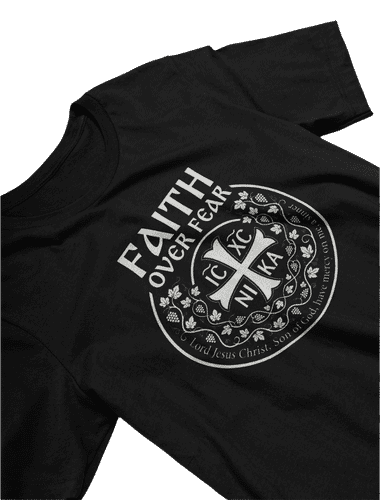
Carry the Symbol of Victory
In a world full of noise and worry, remind yourself, and everyone you meet, that Jesus Christ Conquers.
The traditional IC XC NIKA Christogram has stood for centuries.
Our 🎁 gift to the community: use code WELCOME-10 at checkout.
