
Have you ever worked tirelessly day and night, poured every ounce of your energy into a project, family endeavor, or personal goal, only to come up completely empty-handed?
This universal human experience of exhaustion, failure, and spiritual frustration is not new.
Two thousand years ago on the shores of the Lake of Gennesaret, experienced fishermen faced the exact same reality. They had laboriously thrown their heavy nets into the water all night long, utilizing every professional skill they possessed, yet caught nothing.
The Gospel reading of the First Sunday of Luke reveals a transformative spiritual truth: human labor, no matter how skilled or earnest, remains fruitless when disconnected from divine grace and obedience to God.
When Christ enters the boat of our lives, our human emptiness is transformed into an overwhelming abundance.
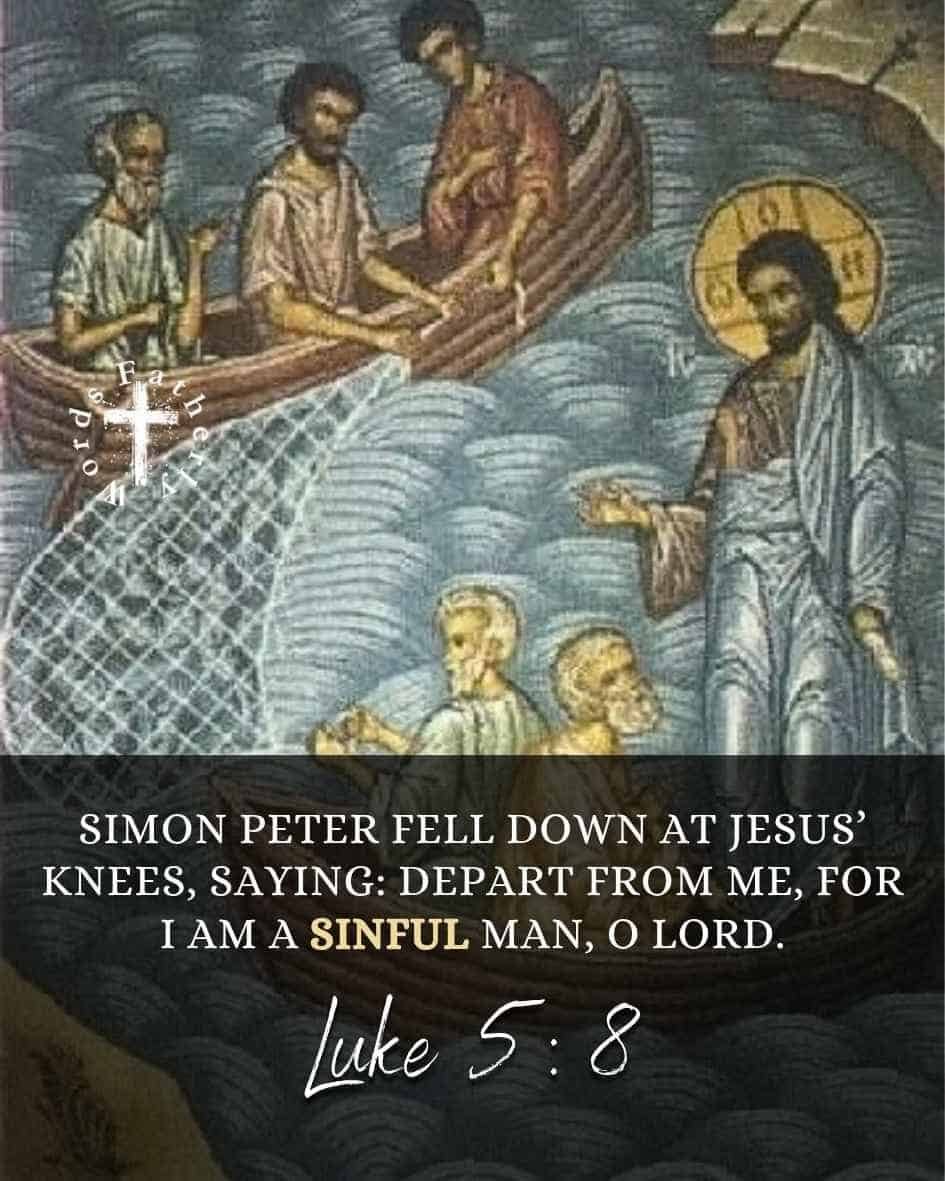
Why Does the Orthodox Church Read Luke 5:1–11 on the First Sunday of Luke?
In the liturgical life of the Eastern Orthodox Church, the reading of the Gospel of Luke begins immediately following the Feast of the Universal Exaltation of the Holy Cross in mid-September.
The First Sunday of Luke marks a pivotal transition in the church calendar, shifting the liturgical focus toward the public ministry of Our Lord Jesus Christ and the calling of His holy Apostles.
The Church purposefully sets Luke 5:1–11 at the head of this new liturgical cycle because it presents the foundational conditions of Christian discipleship: hearing the Word of God, practicing unconditional obedience to His divine command, recognizing our own sinfulness, and surrendering our self-will to follow Him.
Just as the early Church was built upon the apostolic witness of Peter, James, and John, every Orthodox Christian entering this liturgical season is invited to step into the boat, let down the nets of faith, and become an active participant in God’s divine plan of salvation.
The Holy Gospel According to St. Luke 5:1–11 (Scripture Text)
Below is the authentic Gospel text for the First Sunday of Luke, presented with inline verse numbers for accurate scripture study and spiritual reflection:
[1] And it came to pass, that when the multitudes pressed upon him to hear the word of God, he stood by the lake of Genesareth,
[2] And saw two ships standing by the lake: but the fishermen were gone out of them, and were washing their nets.
[3] And going into one of the ships that was Simon’s, he desired him to draw back a little from the land. And sitting he taught the multitudes out of the ship.
[4] Now when he had ceased to speak, he said to Simon: Launch out into the deep, and let down your nets for a draught.
[5] And Simon answering said to him: Master, we have labored all the night, and have taken nothing: but at thy word I will let down the net.
[6] And when they had done this, they enclosed a very great multitude of fishes, and their net broke.
[7] And they beckoned to their partners that were in the other ship, that they should come and help them. And they came, and filled both the ships, so that they were almost sinking.
[8] Which when Simon Peter saw, he fell down at Jesus’ knees, saying: Depart from me, for I am a sinful man, O Lord.
[9] For he was wholly astonished, and all that were with him, at the draught of the fishes which they had taken.
[10] And so were also James and John the sons of Zebedee, who were Simon’s partners. And Jesus saith to Simon: Fear not: from henceforth thou shalt catch men.
[11] And having brought their ships to land, leaving all things, they followed him.
Short Commentary on the Gospel Reading of Luke 5:1–11
1. The Ship as a Pulpit and the Sanctification of Creation
In today’s Gospel passage, we witness the dramatic call addressed by Jesus to His first three disciples: Peter, James, and John.
At the time, they were unknown fishermen of Judea carrying out their daily labor by the Lake of Gennesareth. Seeing the multitudes pressing upon Him to hear the word of God, Jesus enters Simon Peter’s boat, asks him to put out a little from the land, and sits down to teach the crowds from the water.
There is profound spiritual beauty in this action. Jesus takes Peter’s humble fishing vessel and turns it into a holy pulpit to preach to the people.
Wherever Christ enters into our lives, every ordinary tool, every place of work, and every circumstance is transformed into a pulpit that confesses His divinity, His omnipotence, and His divine peace.
2. The Struggle of Human Logic vs. Divine Command
After teaching the crowds, Christ speaks to Simon with divine certainty: “Launch out into the deep, and let down your nets for a draught”.
Consider the situation from a human perspective. Simon Peter was a seasoned, professional fisherman. Christ was a carpenter’s son. Peter had years of practical experience on those specific waters; Christ did not.
Furthermore, Peter had immediate, empirical evidence: he and his crew had spent the entire night struggling in the dark and caught absolutely nothing.
Human logic and physical exhaustion told Peter that trying again in the bright daylight was pointless.
Initially, Peter hesitates, voicing the natural complaint of human fatigue: “Master, we have labored all the night, and have taken nothing“.
His human reasoning and physical tiredness briefly block him from hearing the divine word. Yet, despite his fatigue and professional doubts, Peter surrenders his human logic and replaces it with profound trust in God, declaring: “but at thy word I will let down the net“.
What magnificent faith is hidden within those words! “Because You say so, Lord, I will obey.”
When Peter puts aside his worldly knowledge and executes the command of the Master, the reward of obedience immediately follows. They enclose such a vast quantity of fish that their nets begin to tear and both boats begin to sink under the weight of God’s blessing.
3. Self-Awareness and True Repentance: “Depart From Me”
The overwhelming abundance of fish causes a sudden spiritual breakthrough in Simon Peter. He is filled with holy awe and wonder at the miraculous catch. Falling at the knees of Jesus, Peter cries out: “Depart from me, for I am a sinful man, O Lord“.
In this moment, Peter recognizes that the Man standing in his boat is not merely an extraordinary teacher or prophet, but the Lord Himself, the searcher of hearts and minds.
Peter enters into deep self-awareness, which is the foundational prerequisite for true repentance. Realizing his own unworthiness in the presence of divine holiness, he begs Christ to step out of the boat, fearing that his personal sins might diminish or disrespect the majesty of God’s divinity.
Peter’s deep humility and self-knowledge become his greatest virtue. It is precisely this profound awareness of his spiritual weakness that makes him fit to receive the keys of the Kingdom of Heaven.
Seeing Peter’s contrite heart, Jesus reassures him with divine tenderness: “Fear not; from henceforth thou shalt catch men“.
From that moment on, Peter would no longer pull dying fish out of the sea, but would cast the net of divine preaching to draw living souls out of the stormy waters of sin into the eternal Kingdom of God.
Hidden Meanings and Allegorical Interpretations in Luke 5:1–11
The Orthodox Church interprets the Sacred Scriptures not only according to the literal, historical narrative, but also through deep allegorical and spiritual lenses:
- The Night: The dark night during which the fishermen labor without result represents the spiritual condition of humanity prior to the coming of Christ. Before the Incarnation, teachers of the Law and human philosophers labored through the long night of history, yet were unable to save human souls or bring true spiritual fruit.
- The Day: The arrival of Christ brings the divine Light of Day. When the Lord appears, darkness vanishes, and spiritual labor yields an eternal harvest.
- The Net: The fishing net is an allegorical image of the Holy Gospel itself. A net is woven from simple, humble cords, yet it possesses immense strength. Similarly, the language of the Gospel is simple, approachable, and unpretentious, yet when cast into the sea of the world, it captures human souls for salvation.
- The Sea: The vast, turbulent sea symbolizes the fallen world, tossed about by the storms of temptation, passion, and spiritual confusion.
- The Fish: The fish hidden in the ocean depths represent human beings living in the obscurity of the world. Once caught in the net of the Gospel, they are not brought unto death, but are preserved alive for eternal life.
- The Partners in the Second Ship: When the net begins to tear from the overwhelming catch, Peter and Andrew signal to their partners in the second boat, James and John, to come and help them. These co-workers represent the holy bishops, priests, spiritual fathers, and teachers of the Church throughout every generation. Apostles cannot haul in the vast harvest of souls alone; they require faithful shepherds to preserve, interpret, and preach the apostolic doctrine across the centuries.
Through every miracle He performs, God reminds humanity of two eternal truths: first, that He watches over the world and governs all creation with His almighty will and wisdom; and second, that without Him, human beings can accomplish nothing of eternal value.
No human effort can bear genuine spiritual fruit without the blessing of God. Even when worldly human wisdom appears to achieve temporary success while opposing God’s law, that success is deceptive.
God, in His infinite mercy, patient long-suffering, and love for mankind, continuously endures human arrogance, awaiting our repentance so that all may be saved and come to the knowledge of the truth.
Practical Applications of Luke 5:1–11 for Daily Life
The Gospel reading of Luke 5:1–11 is brimming with practical wisdom for our modern lives, just as the disciples’ nets were overflowing with blessed fish.
1. The Healing Power of Holy Obedience
If modern Christians can extract one primary lesson from this Gospel reading, it is the supreme virtue of obedience to God’s divine will.
When we live in conscious obedience to Christ and our spiritual fathers, all other spiritual blessings naturally follow into our lives.
Obedience grants us a state of peaceful freedom from worldly care. Anxiety and excessive worldly worry act like a spiritual illness, slowly poisoning the human soul and body, eventually bringing about spiritual death.
When we insist on relying solely on our own intellect, plans, and worldly control, we doom ourselves to constant fear and disappointment.
Conversely, holy obedience cultivates genuine humility in the soul.
Humility neutralizes every demonic temptation and spiritual assault. Where true humility reigns, the power of evil is rendered completely powerless.
Where pride, self-reliance, and ego dominate, spiritual confusion, destructive passions, and internal unrest immediately take root.
When feeling overwhelmed by modern pressures, practical remedies exist to restore inner peace and spiritual strength. By praying through specific Psalms of David alongside the targeted intercessory prayers of Saint Arsenios of Cappadocia, believers can effectively disarm anxiety and rediscover deep soul-tranquility.
You can claim our complete spiritual prayer guide for free to learn how to apply these holy prayers in your daily life.
2. Overcoming Burnout Through Trust in God
Many of us live in a state of perpetual exhaustion because we rely entirely on our limited human strength, professional experience, or worldly resources. We labor all night in our personal or professional endeavors, only to realize that our efforts have left us empty and drained.
The remedy for spiritual and emotional burnout is found in Peter’s faithful declaration: “at thy word I will let down the net“.
We are called to perform our daily duties with diligence, but to surrender the final outcome entirely into the hands of Christ.
When we align our labor with God’s commandments, our work ceases to be a source of exhausting anxiety and becomes a vessel for divine grace.
3. Cultivating Purity of Heart and Peace
The simple fishermen Peter, Andrew, James, and John did not possess worldly wealth, formal scholarly degrees, or social power. Yet when Christ called out, “Follow Me,” they immediately left their nets, their boats, their livelihood, and their earthly security to follow Him.
What convinced them to make such a radical decision?
They were confronted with the absolute, living truth of Christ. In His divine presence, His gaze, and His words, their pure hearts recognized an unshakeable peace and absolute authenticity.
They did not follow a complex logical argument; their clean hearts instantly recognized the voice of God.
In our own lives, when we choose patience over anger, when we grant forgiveness to someone who hurt us, when we tell the truth at personal cost, or when we offer quiet charity without seeking human praise, we taste a quiet, pure joy in our hearts.
These peaceful moments are subtle signs that we are walking in harmony with God’s divine design.
Bringing Sacred History and Authentic Tradition Into Your Home
When we reflect on the calling of the Apostles in Luke 5:1–11, we are reminded of the living continuity of the Orthodox faith, preserved faithfully from the apostolic age through sacred tradition and holy iconography.
For those who deeply cherish authentic Christian history and sacred art, possessing a faithful reproduction of iconic historical imagery offers a daily focal point for prayer and reverence.

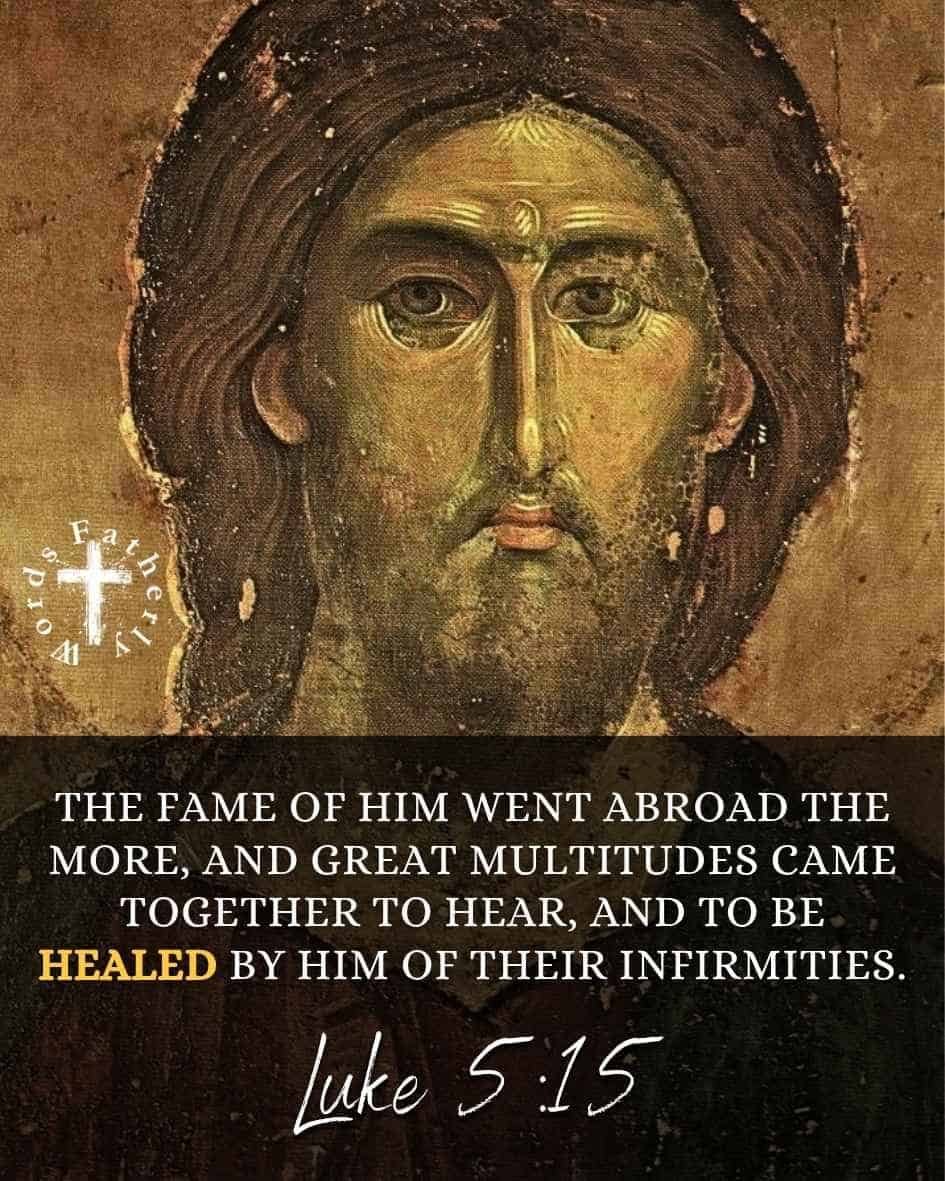
The Christ Pantocrator of Saint Catherine’s Monastery, one of the oldest surviving Byzantine religious icons dating back to the 6th century AD, serves as a magnificent testament to the unchanging truth of our faith.
This museum-quality gallery canvas makes an extraordinary, soul-nourishing gift for devoted Christians and lovers of sacred history.
To welcome this timeless icon into your home, use the special promotional code WELCOME-10 at checkout to receive an exclusive 10% discount on your order.
👉 View Canvas Sizes & Order Here