
A wealthy young man runs to Jesus, kneels before Him, and asks the most important question a human being can ask: “Good Teacher, what shall I do to inherit eternal life?”
He keeps the commandments, his desire is sincere, and Christ looks at him with love. Yet he walks away sorrowful.
- Why did the rich young ruler leave?
- What did Jesus mean by “Why do you call Me good?” and
- Can a rich man enter heaven?
This commentary on the Gospel reading of Luke 18:18–27 answers these questions as the Orthodox Church understands the passage, which the Church reads on the Thirteenth Sunday of Luke.
The short answer: In Luke 18:18–27 a rich ruler asks Jesus how to inherit eternal life. Christ points him to the commandments, then calls him to sell all, give to the poor, and follow Him. The young man leaves sorrowful because his heart is bound to his wealth. Christ then teaches that what is impossible for man is possible for God.
Luke 18:18–27: The Gospel Reading of the Rich Young Ruler
[18] Now a certain ruler asked Him, saying, “Good Teacher, what shall I do to inherit eternal life?”
[19] So Jesus said to him, “Why do you call Me good? No one is good but One, that is, God.
[20] You know the commandments: ‘Do not commit adultery,’ ‘Do not murder,’ ‘Do not steal,’ ‘Do not bear false witness,’ ‘Honor your father and your mother.’ ”
[21] And he said, “All these things I have kept from my youth.”
[22] So when Jesus heard these things, He said to him, “You still lack one thing. Sell all that you have and distribute to the poor, and you will have treasure in heaven; and come, follow Me.”
[23] But when he heard this, he became very sorrowful, for he was very rich.
[24] And when Jesus saw that he became very sorrowful, He said, “How hard it is for those who have riches to enter the kingdom of God!
[25] For it is easier for a camel to go through the eye of a needle than for a rich man to enter the kingdom of God.”
[26] And those who heard it said, “Who then can be saved?”
[27] But He said, “The things which are impossible with men are possible with God.”
The same encounter appears in Matthew 19:16–26 and Mark 10:17–27. Matthew calls the man young, Luke calls him a ruler, and Mark says he came running and knelt. Together they give us the name the rich young ruler.
Why Does the Church Read the Rich Young Ruler on the Thirteenth Sunday of Luke?
The Church places this Gospel in the late autumn weeks when the Nativity of Christ is near, and the timing matters. As the Nativity Fast turns our eyes toward Bethlehem, the Church puts before us the question that gives the Incarnation its meaning: how do I inherit eternal life?
Eternal Life Himself is about to be born in a cave. The Lord who calls the rich ruler to follow Him in poverty first became poor for us: For you know the grace of our Lord Jesus Christ, that though He was rich, yet for your sakes He became poor, that you through His poverty might become rich. (2 Corinthians 8:9)
Saint Gregory the Theologian explains that Christ takes on the poverty of our flesh so that we may share in the riches of His divinity.
The Nativity Fast also calls us to prayer, fasting, and almsgiving. This Gospel sets the last of these before us just when the world around us urges us to buy more, keep more, and want more.
A man who had everything could not give it up in order to receive Christ, and the Church asks each of us whether we could.
The question itself is also a lesson. The lawyer in Luke 10:25 asks it to test Jesus. The ruler asks it with a sincere heart. By setting the sincere asker before us, the Church teaches us how to ask.
The Most Important Question: How Do I Inherit Eternal Life?
Many people came to Jesus for healing, some to mock Him, and some to trap Him. This man came for eternal life.
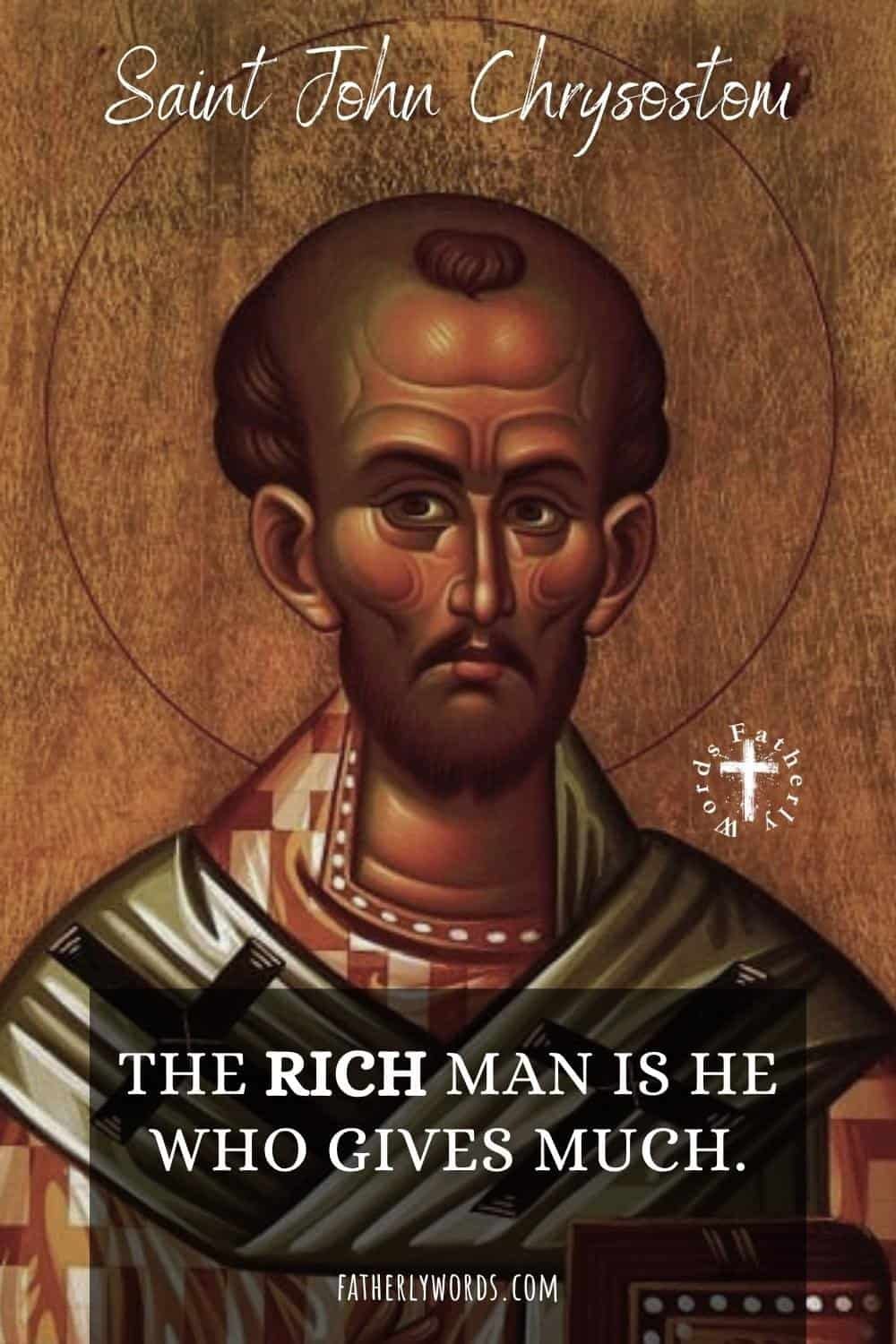
Saint John Chrysostom, commenting on this encounter in his homilies on the Gospel of Matthew, refuses to call him crafty. It is unsafe to judge what is hidden, he says, and Mark removes the suspicion: one came running, knelt before Him, and asked Him. (Mark 10:17)
A man who came to trap Christ would also not have left grieving. The Pharisees left furious when their mouths were shut. The ruler was sincere, but a stronger passion held him.
What was he really asking? Not how to become a decent person.
In Orthodox teaching, eternal life is not only a reward after death. It is the life of God Himself: And this is eternal life, that they may know You, the only true God, and Jesus Christ whom You have sent. (John 17:3)
God alone is good and eternal, and whoever shares in His life becomes good and eternal by grace.
This is why we do not come to the Church to improve our behavior or to fulfill a religious duty. We come to sow immortality and to receive the first fruits of eternal life. It is the most important question of our life, because everything else will pass, and only what we did for our soul will remain.
Why Do You Call Me Good? What Jesus Meant
Jesus does not answer at once. He first corrects the way the question was asked: why call Him good, when no one is good but God alone?
Some use this verse to argue that Christ denied being God. Saint John Chrysostom reads it the opposite way. Jesus did not say “I am not good,” and He did not say “only My Father.” He said that no one is good, meaning no human being, when compared with the goodness of God.
The young man approached Him as one teacher among many, so Christ speaks to him at his own level and lifts him step by step toward the truth. The unspoken logic is this: if you call Me good, you confess Me as God, since only God is perfectly good and the source of all goodness. And if you confess Me as God, you owe Me perfect obedience in what I am about to say.
This is why the Church confesses Christ as the incarnate Son of God, of one essence with the Father, and why the icon of Christ Pantocrator, the Ruler of All, looks down from the dome of Orthodox churches.
The One who stood before the young man was not only a wise teacher. He was the very Source of the goodness the young man was seeking.
There is a second layer. Christ hides Himself in His word. Whoever receives that word and begins to live it discovers the divinity of the One who gave it and tastes His grace: Oh, taste and see that the LORD is good; blessed is the man who trusts in Him! (Psalm 34:8)
God does not force anyone. He offers the truth in a way that leaves a person free to test it by doing it.
Chrysostom also explains the purpose of this first answer. Jesus frees the young man from flattery, draws his gaze away from earthly things, and fixes it on God, the root and source of every good, so that he would seek heavenly gifts and give honor where honor belongs.
Why Keeping the Ten Commandments Was Not Enough
Christ answers the question about eternal life by pointing to the commandments: the way into life is to keep them. The ruler replies with a calm that startles us: All these things I have kept from my youth.
Chrysostom does not doubt him. The man was not boasting, and his next question shows it: what do I still lack? He sensed that the law, though good, had not brought him to the fullness he longed for. This is why Israel waited for the Messiah, who would reveal all truth.
The old law was given to restrain sin. It could not lead a person to spiritual perfection: For the law was given through Moses, but grace and truth came through Jesus Christ. (John 1:17)
The young man had kept the commandments in the spirit of the law, not yet in the spirit of grace.
Saint Sophrony of Essex used this very passage to explain the step from good behavior to a new life in the uncreated God. The man stood high on the first level, and Christ was calling him to the second.
Outward obedience without the heart cannot find the fullness of life hidden inside the commandments. The ruler also held a quiet mistake, that he was blameless before the law. Yet all our righteousnesses are like filthy rags. (Isaiah 64:6)
Even the one who has done everything he was commanded must say: We are unprofitable servants. We have done what was our duty to do. (Luke 17:10)
Christ’s whole teaching aims at one goal: Therefore you shall be perfect, just as your Father in heaven is perfect. (Matthew 5:48)
So Jesus shows the young man exactly what he lacks. Every commandment exists to free the heart, to loosen the mind’s grip on created things, and to lead the soul out of the prison of the passions, so that a person can love God with his whole being.
Sell All That You Have: What Jesus Asked and Why
Only Mark records the look that came before the hard word: Then Jesus, looking at him, loved him. (Mark 10:21)
Love speaks the truth. Few images show this gaze, firm and tender at once, like the Christ Pantocrator of Saint Catherine’s Monastery on Mount Sinai, one of the oldest Byzantine icons, painted in the 6th century with one stern and one merciful half of the face.
Our canvas of this icon is a perfect original gift for believers, a lasting reminder of Christ in the home, and the code WELCOME-10 gives you 10% off.

The command to sell everything was not a rule laid on every person. It was the exact medicine for this man’s wound. He was bound by his love of possessions, and Christ, who knows the heart of every person, gives each one the treatment he needs.
Abraham loved Isaac, the son of the promise, and his heart was divided, so God commanded him to offer the boy. When the patriarch chose the love of God over the love of his own son, God gave Isaac back together with the fullness of divine love: Your father Abraham rejoiced to see My day, and he saw it and was glad. (John 8:56)
The ruler was sincere, yet he found no strength to take up the sword of the Spirit, the word given to him, and cut the chains of his passion.
Sometimes God seems severe. He speaks of taking up the cross, of renouncing possessions, even of denying ourselves. Yet He speaks these hard words because He longs to give what He has stored for us in heaven, exceedingly abundantly above all that we ask or think. (Ephesians 3:20)
Renunciation and the love of God walk together, because letting go is what turns the heart wholly toward the Lord.
Chrysostom notices how Jesus speaks. Before naming the labor, He names the prize: treasure in heaven, and then come, follow Me, which is the greatest reward of all.
He takes nothing from the young man. He adds. This treasure is as far above earthly gold as heaven is above earth, and nothing can steal it. Still, it is not enough to despise money. A person must feed the poor, and above all follow Christ, which means to keep all His commandments and be ready to die for Him: If anyone desires to come after Me, let him deny himself, and take up his cross daily, and follow Me. (Luke 9:23)
The invitation was also an honor, for it offered the man a place as a disciple, like the Twelve.
Some who heard these words took them literally. In Matthew the Lord says it this way: If you want to be perfect, go, sell what you have and give to the poor, and you will have treasure in heaven; and come, follow Me. (Matthew 19:21)
When Saint Anthony the Great heard these words read in church, he received them as spoken to himself, gave his inheritance to the poor, and went to the desert, where he became the father of monks.
Why Did the Rich Young Ruler Walk Away Sorrowful?
When the young man heard the answer, he did not argue. Chrysostom says the passion for money struck him so hard that he could not even reply. The one who came with joy and eagerness left silent, gloomy, and grieved.
Luke gives the reason plainly: he was very rich. Chrysostom observes that great wealth grips a person more tyrannically than small means, because every new gain feeds the flame, deepens the desire, and makes the owner feel his lack even more.
The Apostle names two kinds of sorrow: For godly sorrow produces repentance leading to salvation, not to be regretted; but the sorrow of the world produces death. (2 Corinthians 7:10)
The ruler’s sorrow was the second kind, born of an attachment that could not be satisfied. Godly sorrow is born when a person sees the goodness of God and his own fall and poverty, and it lifts him to a new level of life.
Had the young man grieved over his own poverty before the goodness of Christ, his sorrow would have become repentance.
He stood face to face with Eternal Life and walked away. The Gospel shows no dramatic sin here. It shows how one attachment can hold back a good and sincere person: For where your treasure is, there your heart will be also. (Matthew 6:21)
That is why the Lord asked for the one thing that held him.
Can a Rich Man Enter Heaven? What Jesus Really Said About Wealth
Yes, a rich man can enter the Kingdom of God, but not by his own strength and not while his heart is enslaved to his wealth.
Christ calls it hard, then impossible for man, and finally possible with God.
His words aim at slavery to money, not at money itself. Mark records the Lord’s own clarification: Children, how hard it is for those who trust in riches to enter the kingdom of God! (Mark 10:24)
Chrysostom notes that Christ blames not riches but those who are slaves to them. If it is hard for the rich to enter, it is harder still for the covetous, who also take what belongs to others. If merely not giving is an obstacle to the Kingdom, think of the fire that taking stores up.
Christ also says the Kingdom of God, not simply heaven. In Orthodox teaching it is not only a place we reach after death. It is the life of God, which we begin to receive now, and a heart crowded with possessions has no room for it.
The question is never only about bank accounts. A person may be rich and still have a free heart, one that melts with the love of God and uses its goods to fulfill the commandment of love for the neighbor. He becomes a steward of God over what was given to him, and in that sense he is truly rich.
Another person may own almost nothing and yet be chained to bitterness and complaint, even against God, and be lost.
What matters is where the heart is, because that shows where the treasure is: You cannot serve God and mammon. (Matthew 6:24)
Now the camel and the eye of a needle. Christ chose the most extreme picture. Chrysostom explains that He shows the thing to be not merely hard but impossible, and impossible beyond measure. Popular explanations soften the image into a small gate or a tight squeeze, but the disciples heard it as a real impossibility.
That is why they asked Who then can be saved? and why Christ answered that what is impossible with men is possible with God. If a rich man lives with true piety, his reward is no ordinary one. It is the work of God and takes much grace.
Why did Jesus say this to disciples who owned nothing? Chrysostom suggests He wanted them never to be ashamed of poverty.
Scripture shows rich people who were saved:
- Abram was very rich in livestock, in silver, and in gold. (Genesis 13:2)
- Joseph of Arimathea, a rich man, became a disciple of Jesus and gave his own tomb for the Lord’s burial.
- Zacchaeus, a chief tax collector who was rich, said, Look, Lord, I give half of my goods to the poor, and Jesus answered that salvation had come to his house (Luke 19:8–9).
Paul even gives instructions to wealthy believers: Command those who are rich in this present age not to be haughty, nor to trust in uncertain riches but in the living God, who gives us richly all things to enjoy. (1 Timothy 6:17)
What these people share is not a small bank balance but a free heart that holds wealth as a trust from God.
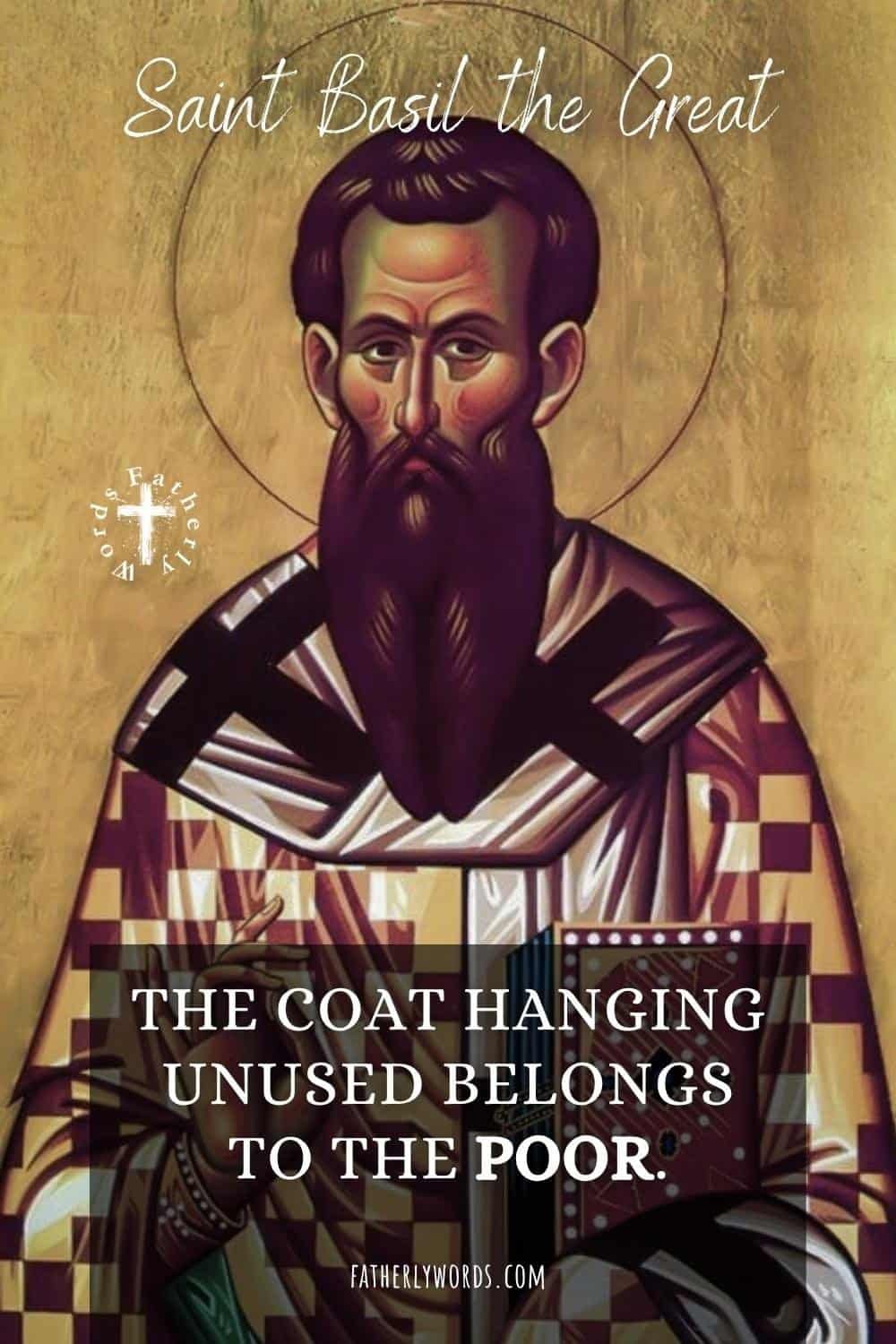
Saint Basil the Great teaches that the bread in your cupboard belongs to the hungry and the coat in your closet to the one who has none.
Saint John Chrysostom goes further and calls withholding from the poor a kind of theft, because what we keep is held for them as well.
A rich man enters not by being poor in pocket but by becoming poor in spirit: Blessed are the poor in spirit, for theirs is the kingdom of heaven. (Matthew 5:3)
Who Then Can Be Saved? With God All Things Are Possible
The disciples were shaken. If the rich, whom everyone considered blessed, could hardly be saved, who could?
Christ’s answer is the comfort and hope of every Christian: With men this is impossible, but with God all things are possible. (Matthew 19:26)
Chrysostom stresses that Jesus did not speak the earlier words to make us despair. He said them so that, once we grasp how great the achievement is, we hurry eagerly into the struggle, call on God’s help in our good labors, and win eternal life.
This saying points first to the work of Christ Himself. Before Him, salvation was out of reach, since according to the Old Testament no one could see the face of God and live. But the Son and Word of God accepted the mission to save the world and fulfilled it out of love for the Father: And being found in appearance as a man, He humbled Himself and became obedient to the point of death, even the death of the cross. (Philippians 2:8)
In the body of our humiliation He revealed the perfection of the Father, and He gave us a divine model to look to, so that we do not wander from the way of salvation.
It points second to how we are saved. The commandment is far above the strength of fallen man: Your commandment is exceedingly broad. (Psalm 119:96)
Saint Sophrony compared the struggler to a drop of water trying to move against a rushing torrent. Yet when a person imitates the Lord and is humbled, he draws the humble Holy Spirit, who comes to help our weakness: Likewise the Spirit also helps in our weaknesses. (Romans 8:26)
Then he is amazed to find that the commandment has changed. It is no longer heavy: His commandments are not burdensome. (1 John 5:3) It shows itself as eternal life.
Christ is clear that on our own we cannot succeed: for without Me you can do nothing. (John 15:5)
When a person has struggled to the end of his strength, God is pleased to reveal His own power, so that His servant feels to the marrow of his bones that by grace you have been saved through faith, and that not of yourselves; it is the gift of God. (Ephesians 2:8)
That power is the pull of the beauty of His Face. It frees a person from every attachment, even from the desire for this present life.
This is why we must never say, “I can’t.” I can’t defeat this passion. I can’t carry this trial. We are weak, but God is almighty, and He is our Father. At the same time, grace does not replace effort. God does not force anyone. He waits for a person to struggle, to cooperate, and to ask.
How to Apply Luke 18:18–27 in Your Daily Life
- Ask the ruler’s question every day. In the morning ask, “How will I inherit eternal life?” In the evening ask, “What did I do today for the eternal Kingdom?”
- Find your one thing. Christ told the ruler, “You still lack one thing.” Ask yourself what would be hardest to give if Christ asked. The sorrow you feel at the thought shows where your heart is attached: money, comfort, status, or even an old grievance.
- Give regularly, not only when it is easy. Make almsgiving a habit, especially in fasting seasons. He who has pity on the poor lends to the LORD, and He will pay back what he has given. (Proverbs 19:17)
- Hold everything as a steward. Your money, time, and talents were entrusted to you by God for the love of neighbor. Take heed and beware of covetousness, for one’s life does not consist in the abundance of the things he possesses. (Luke 12:15)
- Keep the commandments, and do not boast of it. Obey, then call yourself an unprofitable servant. Keep asking Christ what is still lacking.
- Never say “I cannot.” Call on the Name of Jesus: “Lord Jesus Christ, have mercy on me.” If we never stop blessing His holy Name and humbly asking for His help, a moment comes when God stretches out His hand. The difficulty may remain, but the state of our spirit changes, and the heart hears with endless thanksgiving: But God, who is rich in mercy, because of His great love with which He loved us, even when we were dead in trespasses, made us alive together with Christ (by grace you have been saved). (Ephesians 2:4–5)
There are hours of dead ends, deep sorrow, and darkness, when no human help is in sight. Christ filled every part of creation with His presence, even Hades, so there is no place or circumstance where a person cannot meet Him.
Chrysostom warns that the endless desire for more fills even our present life with anxiety, worry, and problems, and that death comes at last to take us stripped of everything we guarded with such effort, leaving only the wounds our soul took from it all.
Modern life multiplies anxiety, and Orthodox Christians have long turned to specific Psalms of David and the prayers of Saint Arsenios the Cappadocian to bring their worries to God. We gathered them in a free ebook, and you can receive it by email through the form on this page.
Frequently Asked Questions About Luke 18:18–27
Is it a sin to be rich?
No. The Gospel blames slavery to wealth, not wealth itself. Abraham and Joseph of Arimathea were rich and are honored in Scripture. A rich person must hold his wealth as a steward, share it with the poor, and never trust in it more than in God.
Does the Orthodox Church require every Christian to sell everything?
No. Christ gave this man the exact medicine for his wound. Monks take the words literally, while every Christian is called to be free from possessions, to give to the poor, and to be ready to give up anything for Christ.
Does “Why do you call Me good?” mean Jesus is not God?
No. Saint John Chrysostom explains that Christ did not exclude Himself from goodness. He compared human goodness with the goodness of God and led the young man toward confessing Him as God. The Church confesses Him as the Son of God, of one essence with the Father.
What does the camel and the eye of the needle mean?
It is a picture of impossibility. No one enslaved to riches can enter the Kingdom of God by human strength. Christ’s next words show the way: what is impossible with men is possible with God.
When is Luke 18:18–27 read in the Orthodox Church?
It is the Gospel of the Thirteenth Sunday of Luke, in the late autumn weeks when the Nativity of Christ draws near.
Final Thoughts: Follow Christ With a Free Heart
The story of the rich young ruler ends sadly, but the passage ends in hope. The Lord who asks for what is impossible also gives the power to do it. The Gospel does not tell us what became of the young man. It leaves his question open to us: what shall I do to inherit eternal life?
Christ’s answer is still the same. Keep the commandments, ask Him to free your heart from whatever holds it, give to the poor, follow Him, and never stop asking for grace. If riches increase, do not set your heart on them. (Psalm 62:10)
