
When many people in the Western world think about salvation, they often picture a cosmic courtroom. In this view, God is viewed as a stern judge, humanity as guilty criminals, and salvation as a legal pardon to escape eternal execution.
However, when we read the Holy Scriptures through the living tradition of the Orthodox Church, a radically different picture emerges. Salvation is not a legal transaction; it is a spiritual healing.
God is not an angry deity who needs to be appeased, but the Divine Physician who came down to heal our broken human nature.
This fundamental truth shines brilliantly in the Gospel reading for the Sunday before the Elevation of the Holy Cross. By exploring John 3:13–17, we uncover the heart of Orthodox soteriology—the understanding of salvation as healing, restoration, and ultimate union with God, known in Holy Tradition as theosis.
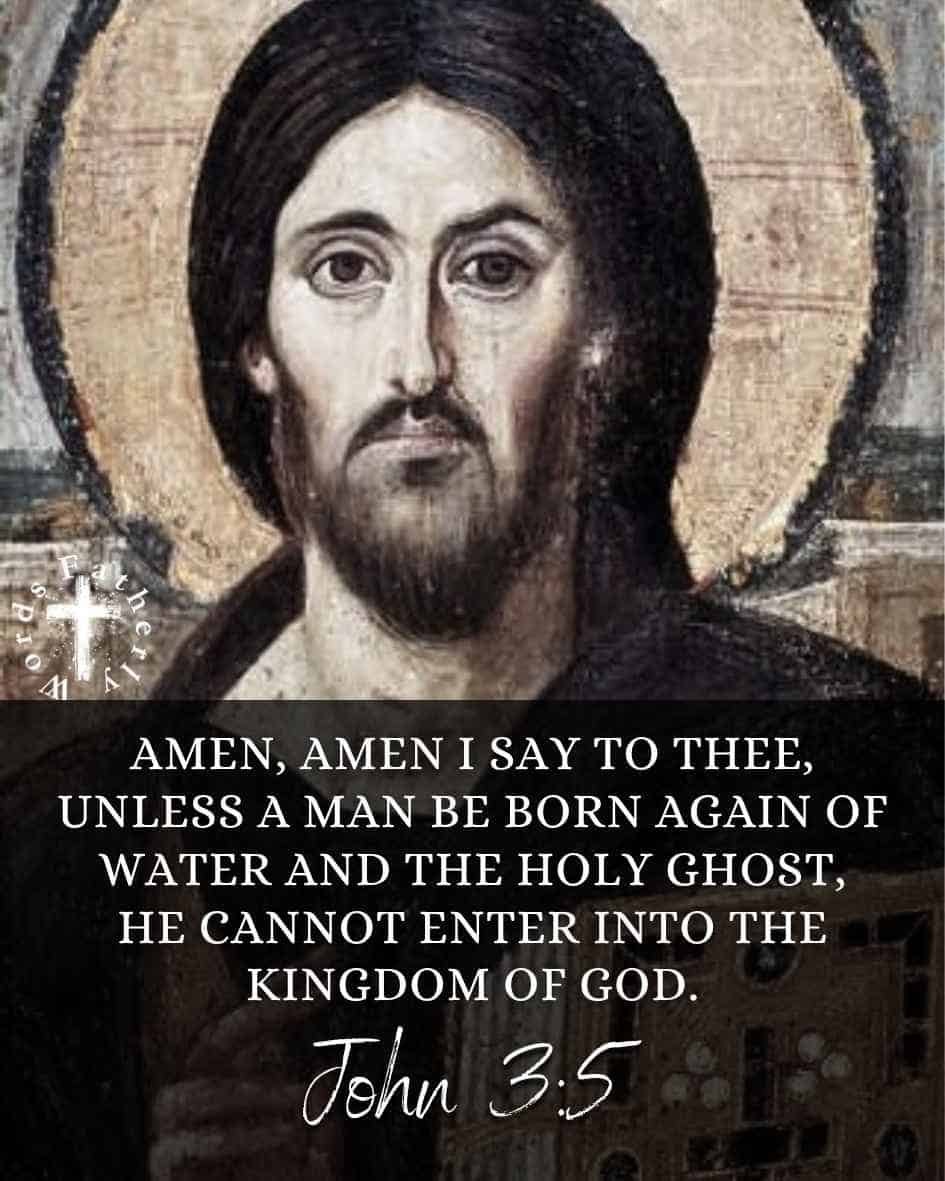
The Authentic Gospel Reading: John 3:13–17
Below is the holy Gospel text read in the Orthodox Church for the Sunday before the Elevation of the Holy Cross:
[13] And no man hath ascended into heaven, but he that descended from heaven, the Son of man who is in heaven.
[14] And as Moses lifted up the serpent in the desert, so must the Son of man be lifted up:
[15] That whosoever believeth in him, may not perish; but may have life everlasting.
[16] For God so loved the world, as to give his only begotten Son; that whosoever believeth in him, may not perish, but may have life everlasting.
[17] For God sent not his Son into the world, to judge the world, but that the world may be saved by him.
Why Does the Orthodox Church Select John 3:13–17 for the Sunday Before the Elevation of the Cross?
The liturgical cycle of the Orthodox Church is a school of spiritual transformation.
Nothing in the Church’s calendar happens by accident. Every Gospel passage read during the Divine Liturgy is selected to prepare our hearts for the mysteries of our faith.
On the Sunday before the Exaltation of the Holy Cross, the Church places John 3:13–17 before us to reframe how we view the Cross. As we approach the feast of the Cross, human instinct might view the Crucifixion purely as an instrument of execution, suffering, and divine wrath.
But the Church presents this reading to teach us that the Cross is actually the throne of divine love and the altar of our healing.
Christ directly connects His impending death on the Cross to the Old Testament event of the Bronze Serpent. Just as the Israelites, bitten by poisonous serpents in the wilderness, received healing and physical life by looking upon the bronze serpent lifted up at God’s command, so humanity, wounded by sin and subject to death, receives spiritual healing and eternal life by turning in faith to Christ, lifted up upon the Cross—the Life-giving Tree.
By choosing this Gospel reading, the Holy Church prepares us to venerate the Cross not as a symbol of death or legal punishment, but as the supreme weapon of peace, the tree of eternal life, and the medicine that cures human mortality.
A Brief Commentary on the Gospel Reading
To fully understand this Gospel passage, we must examine its depth verse by verse according to the Orthodox tradition.
The Mystery of the Incarnation (John 3:13)
“And no man hath ascended into heaven, but he that descended from heaven, the Son of man who is in heaven.”
Only the Divine Logos can reveal heavenly mysteries to mankind. No mortal human power, earthly wisdom, or philosophical speculation could ever ascend into heaven to comprehend God.
Christ, by taking on human flesh through the Incarnation, became the Son of Man while remaining fully God.
Even while walking on earth in human form, as omnipresent God, He remained simultaneously in heaven. He bridges the unbridgeable gap between God and man.
The Bronze Serpent as the Image of the Cross (John 3:14–15)
“And as Moses lifted up the serpent in the desert, so must the Son of man be lifted up: That whosoever believeth in him, may not perish; but may have life everlasting.”
Here, Christ unveils a profound, hidden truth of God’s mysterious plan.
In the desert, Moses raised a bronze serpent on a pole. The bronze serpent took the physical shape of the deadly snakes that bit the people, yet it carried no poison.
In the exact same way, the Son of Man was lifted high upon the Cross, taking on the likeness of sinful human flesh, yet remaining completely without sin.
By taking on our wounded human nature without its sinfulness, Christ neutralizes the poison of death. Anyone who fixes their eyes on Him with living faith is rescued from eternal death and receives everlasting life.
The Unfathomable Love of the Father (John 3:16)
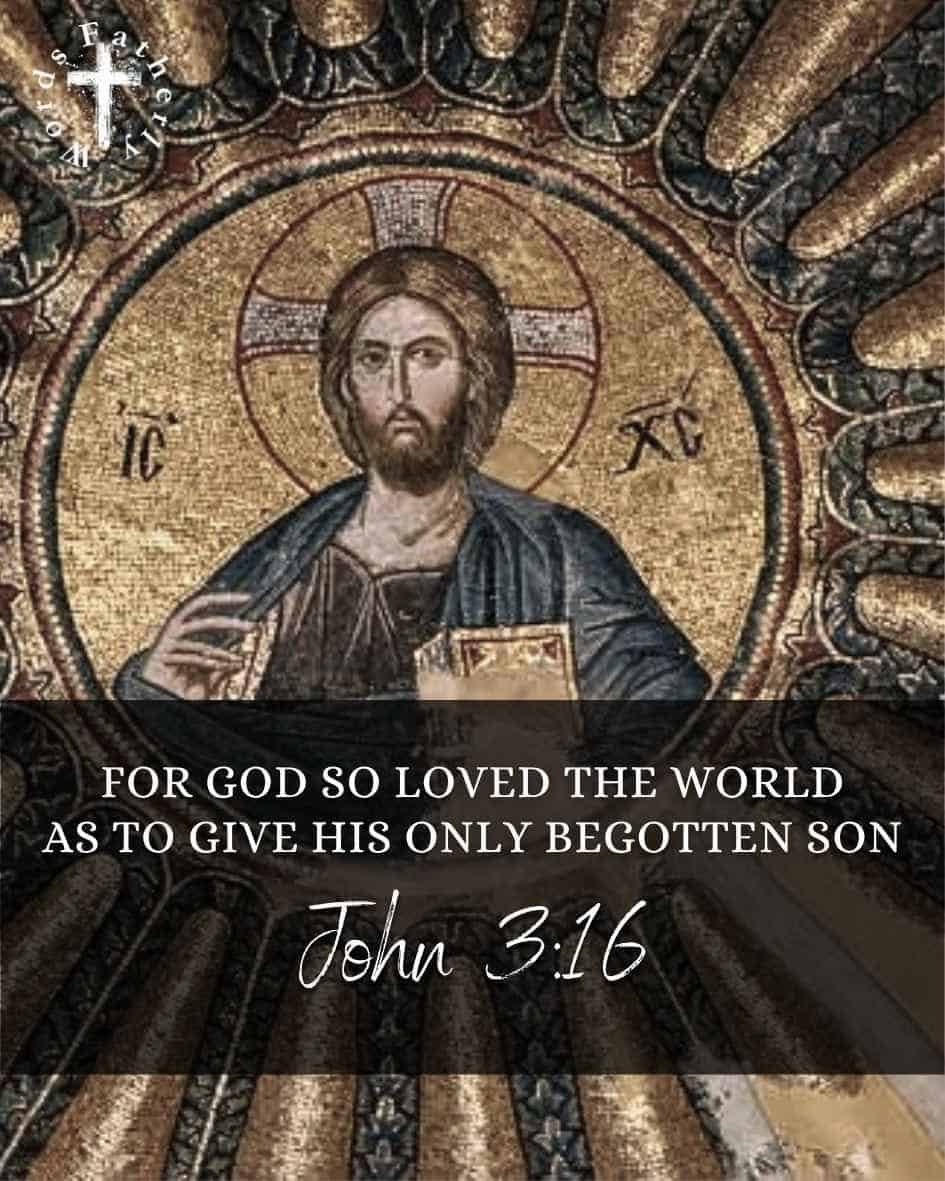
“For God so loved the world, as to give his only begotten Son; that whosoever believeth in him, may not perish, but may have life everlasting.”
In Orthodox theology, this verse is the ultimate revelation of God’s character. God did not send His Son because He was demanding blood to satisfy His offended honor.
Rather, God so loved the human race—a race trapped in sin and rebellion—that He surrendered His only begotten Son to death so that we might live. His love is not conditional; it is an overflowing outpouring of divine compassion aimed at rescuing mankind from destruction.
Salvation, Not Condemnation (John 3:17)
“For God sent not his Son into the world, to judge the world, but that the world may be saved by him.”
While many imagined that the Messiah would come as a severe worldly king to condemn the nations and punish sinners, Christ reveals the true mission of God.
The Son came into a world sick with sin not to cast judgment, but to bring salvation to the entire world.
Condemnation occurs when a person rejects the Light, but God’s primary desire and intent is the restoration and salvation of all.
Deep Orthodox Theology: Salvation as Healing and Theosis
To appreciate the profound nature of John 3:13–17, we must contrast the legalistic understanding of salvation with the authentic Orthodox view.
The Illness of Sin vs. The Crime of Sin
In many Western theological frameworks, sin is understood primarily as a transgression of a legal law, making man a guilty criminal who owes a debt of punishment.
In Orthodox Christianity, sin is understood primarily as an illness, a distortion of our true human nature, and a separation from the source of life.
When Adam fell, human nature became wounded, subject to corruption, sickness, and death.
Sin is not merely breaking a rule; it is spiritual disease that leads to death.
Therefore, when Christ came into the world, He did not come as a magistrate to execute sentence, but as the Good Samaritan who pours oil and wine upon our wounds.
Christ as the Divine Physician
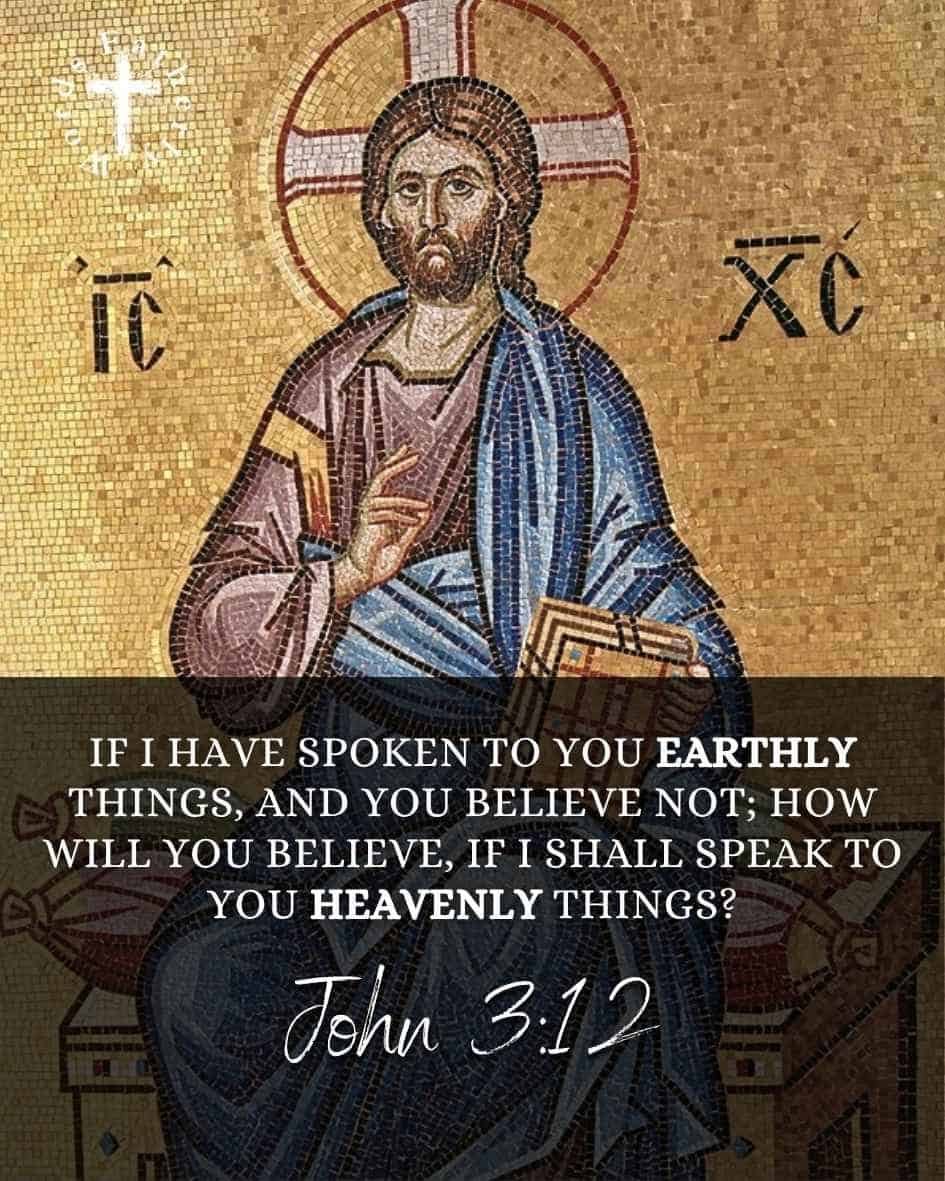
The Orthodox Church consistently refers to Christ as the Divine Physician of our souls and bodies.
The Church itself is not a spiritual courtroom where sentences are passed; it is a spiritual hospital where sick souls come to be healed.
The Sacraments of the Church—Holy Baptism, Holy Chrismation, Holy Confession, and the Holy Eucharist—are spiritual medicines.
In the Holy Eucharist, we receive the very Body and Blood of Christ, which the early Church Fathers called the “medicine of immortality.” When we consume the Holy Gifts, we are united with Christ’s uncreated life, purging our spiritual toxins and renewing our nature.
The Great Mystery of Theosis (Deification)
The central doctrine of human destiny in the Orthodox Church is theosis or deification—the process of a human person becoming united with God and participating in the divine life by grace.
As the Holy Fathers famously summarized:
“God became man so that man might become god.”
This teaching is woven throughout Holy Scripture. When human nature was assumed by Christ in His Incarnation, it was filled with divine life.
Through His voluntary sacrifice on the Cross and His glorious Resurrection, Christ conquered death and granted human nature the capacity for incorruptibility, renewal, and divine beauty.
When believers are mystically united to Christ through the sacraments and live a life of virtue and prayer, they inherit the gifts of the divine Incarnation. They are freed from the corruption of nature, restored to the divine image, and gradually transformed into the likeness of God.
Salvation is not merely a ticket to a safe destination; it is the active, unending transformation of the human soul and body into a vessel of the Holy Spirit.
Modern life often burdens us with overwhelming anxiety, inner restlessness, and constant stress that distracts us from this path of healing.
If you are struggling to find peace amid life’s daily battles, you can discover time-tested spiritual comfort by downloading our free PDF guide featuring specific Psalms of David and sacred prayers of Saint Arsenios of Cappadocia designed to quiet the mind and restore inner tranquility.
The Role of Human Will and Synergy (Synergeia)
A crucial teaching of Orthodox Christianity highlighted in John 3:15–16 is the principle of synergy—the co-operation between divine grace and human free will.
Salvation is fully prepared and offered by God as a free gift.
Christ’s sacrifice on the Cross brought about the Resurrection and opened the gates of the Kingdom to all.
However, God never forces His love upon anyone.
Salvation requires our active participation and free consent.
How We Cooperate with Divine Grace:
- Living Faith: Faith in the Orthodox tradition is not merely a mental agreement that God exists. It is an active, trusting fidelity to Christ that shapes our entire lifestyle.
- Keeping the Commandments: Faith is proven and made active through love, and love is shown by keeping Christ’s commandments. Obeying God’s commandments is not a way to earn points; it is the spiritual exercise that aligns our heart with God’s nature.
- Ascetic Effort (Askesis): Fasting, prayer, prostrations, and vigil are spiritual exercises that crucify the passions and open our hearts to receive the Holy Spirit.
- Sacramental Participation: Continuously cleansing our souls through Confession and uniting ourselves with Christ in the Holy Eucharist.
As we progress in love toward God through these practices, the Holy Spirit cleanses our hearts, enabling us to experience the reality of salvation not as a future legal verdict, but as a present experience of heavenly joy.
The Cosmic Vision: A Transfigured Creation
The salvation described in John 3:17 extends beyond individual human souls. God sent His Son so that the world might be saved through Him.
In Orthodox theology, humanity is the priest of creation. When man fell, the entire material world was dragged down into decay. Consequently, when Christ transfigures human nature, the entire cosmic creation is invited into this transfiguration.
The Church lives in anticipation of the “new creation”—a restored cosmos where righteousness dwells, death is swallowed up, and God wipes away every tear.
We catch a foretaste of this transfigured world in every Divine Liturgy, where simple bread and wine, through the invocation of the Holy Spirit, become the Body and Blood of Christ and instruments of divine grace.
Furthermore, we see this transfiguration realized in the Saints of the Church, who through their holy lives became living icons of the Kingdom of God.
Practical Applications for Everyday Orthodox Christian Life
Understanding John 3:13–17 as a message of spiritual healing completely reshapes how we live our faith day by day.
1. Shift Your View of God
Stop viewing God as an angry monitor waiting for you to fail. Approach Him as a loving Father and a gentle Physician. When you stumble into sin, do not run away in shame as if fleeing a judge. Instead, run immediately to the spiritual hospital of Confession to receive medicine and healing for your soul.
2. View Others with Compassion, Not Judgment
Since Christ came into the world not to condemn but to save, we must stop condemning the people around us. When you see someone struggling with sin or spiritual darkness, recognize them as a wounded person bitten by the serpent of sin. Offer them love, prayer, and mercy rather than harsh criticism.
3. Embrace the Cross in Daily Life
Looking upon Christ lifted on the Cross gives us strength to bear our own daily crosses—illnesses, trials, grief, and sacrifices. When borne with faith, our personal trials become instruments of purification that draw us closer to the divine light.
4. Cultivate Stillness and Prayer in the Home
To maintain a life focused on theosis, our homes must become extensions of the Church—places of peace, icon corners, and quiet prayer.

Carry the Symbol of Victory
In a world full of noise and worry, remind yourself, and everyone you meet, that Jesus Christ Conquers.
The traditional IC XC NIKA Christogram has stood for centuries.
Our 🎁 gift to the community: use code WELCOME-10 at checkout.
Conclusion
The message of John 3:13–17 is an invitation to experience the boundless love of God.
Salvation is not a far-off legal decree; it is a lived, daily experience of spiritual transformation and healing.
As we prepare to exalt the Holy Cross, let us fix our eyes on the Son of Man lifted up for our sake.
Let us lay aside fear, guilt, and legalistic terror, and step with confidence into the spiritual hospital of the Church, where the Divine Physician stands ready to heal our wounds, restore our nature, and grant us life everlasting.

Your site has provided me personally with simply the details that I just needed.