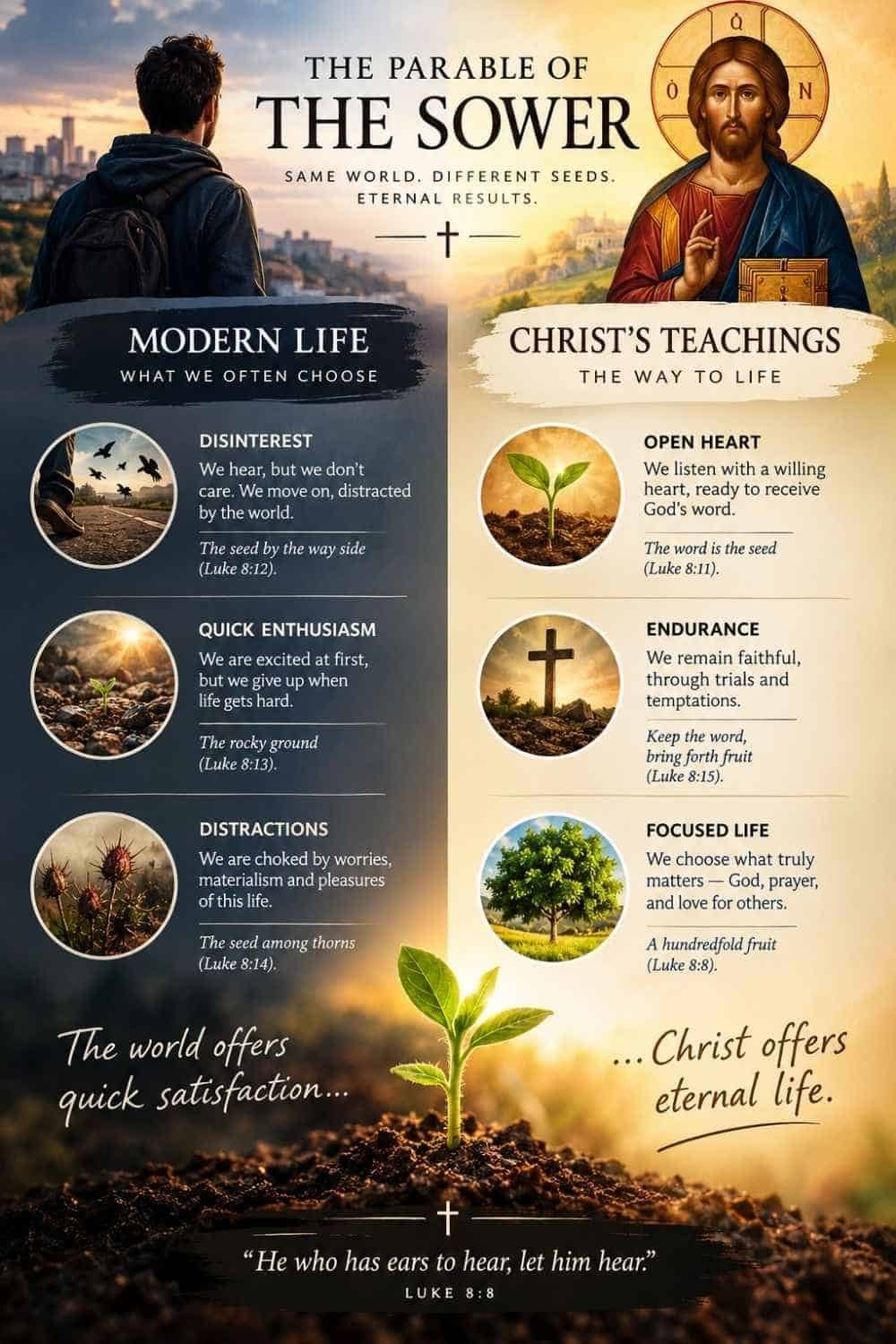
The Parable of the Sower stands as one of the most foundational teachings in the entire Gospel corpus.
It is uniquely significant because it is the only parable that our Lord Jesus Christ explicitly and thoroughly decodes for His disciples.
Recorded in Luke 8:5–15, this sacred text opens a window into the mystery of human salvation, the condition of the human heart, and the eternal power of the Word of God.
The Sacred Text: Luke 8:5–15
Here is the exact, authentic Gospel passage as proclaimed in the Orthodox Church:
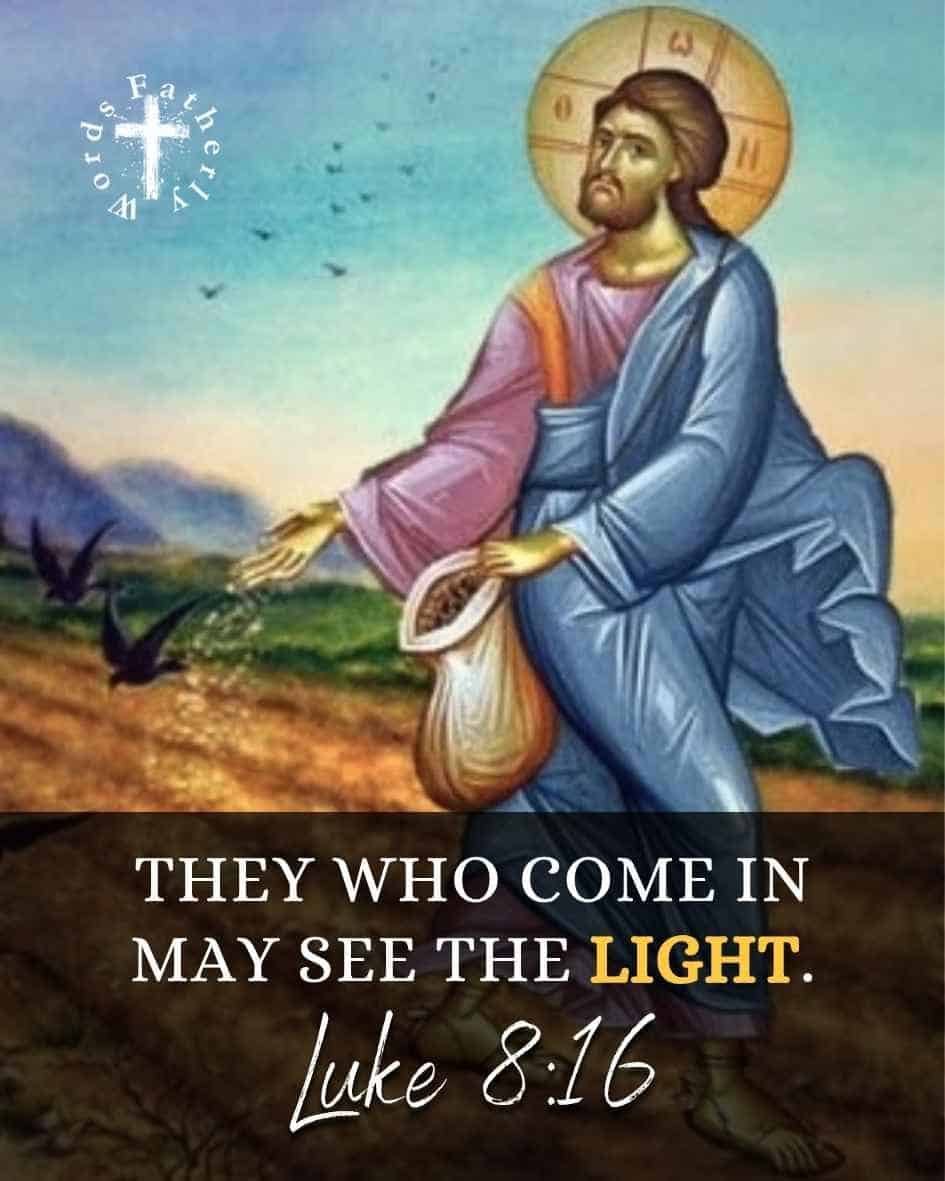
[5] The sower went out to sow his seed. And as he sowed, some fell by the way side, and it was trodden down, and the fowls of the air devoured it.
[6] And other some fell upon a rock: and as soon as it was sprung up, it withered away, because it had no moisture.
[7] And other some fell among thorns, and the thorns growing up with it, choked it.
[8] And other some fell upon good ground; and being sprung up, yielded fruit a hundredfold. Saying these things, he cried out: He that hath ears to hear, let him hear.
[9] And his disciples asked him what this parable might be.
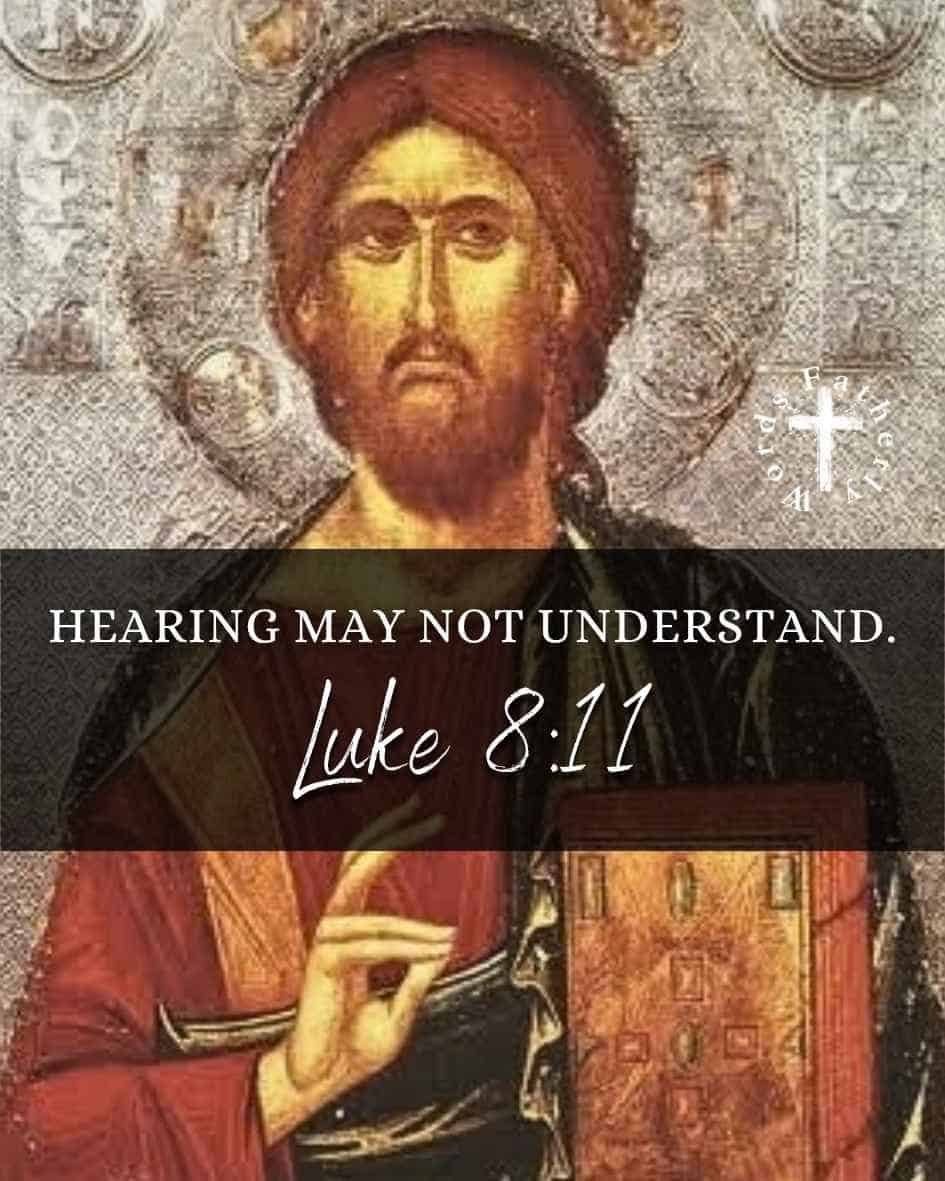
[10] To whom he said: To you it is given to know the mystery of the kingdom of God; but to the rest in parables, that seeing they may not see, and hearing may not understand.
[11] Now the parable is this: The seed is the word of God.
[12] And they by the way side are they that hear; then the devil cometh, and taketh the word out of their heart, lest believing they should be saved.
[13] Now they upon the rock, are they who when they hear, receive the word with joy: and these have no roots; for they believe for a while, and in time of temptation, they fall away.
[14] And that which fell among thorns, are they who have heard, and going their way, are choked with the cares and riches and pleasures of this life, and yield no fruit.
[15] But that on the good ground, are they who in a good and perfect heart, hearing the word, keep it, and bring forth fruit in patience.
Why Does the Church Appoint Luke 8:5–15?
In the Orthodox liturgical calendar, the reading of Luke 8:5–15 is assigned to the 4th Sunday of Luke, which typically falls during the second Sunday of October. This specific placement carries deep pastoral and theological significance within the life of the Church.
First, autumn marks the traditional commencement of the Church’s catechetical year.
As Sunday schools, adult education groups, and parish ministries resume full activity after the summer months, the Church wisely places this parable at the forefront. It serves as a spiritual alarm clock, reminding every listener that hearing the teachings of Christ is only the initial step.
The true measure of a Christian life lies in how deeply those teachings take root and what fruit they produce over time.
Second, this Sunday frequently coincides with or honors the memory of the Holy Fathers of the Seventh Ecumenical Council.
These holy defenders of the faith preserved the true doctrine of Christ against heresy, protecting the purity of the divine seed.
Just as the Holy Fathers guarded the Word of God from being corrupted or trampled, each believer is called on this Sunday to guard their own heart, ensuring that the heavenly seed remains protected from spiritual adversaries.
By proclaiming Luke 8:5–15 at this precise time in the liturgical cycle, the Church invites us to evaluate the state of our spiritual soil before entering the deeper ascetic seasons of the Church year.
Understanding the Hidden Meaning in Luke 8:5–15: A Concise Commentary
To grasp the full spiritual richness of Luke 8:5–15, we must look beyond the physical imagery of agriculture and enter the inner realm of the human heart. The Lord used everyday agricultural scenes to convey eternal truths about salvation, grace, and human free will.
1. The Sower and the Seed: Divine Generosity and Infinite Power
The Parable begins with a simple action: “The sower went out to sow his seed“.
In a concise commentary on this passage, we recognize that the Sower is Christ Himself, who came into the world through the Incarnation.
He did not remain in the heavens, distant from humanity; rather, He “went out” to reach us. Because our sins had barred the entrance to heaven, the Master came down to our level, taking on our flesh to cultivate the ruined earth of human nature.
The seed is explicitly defined by Christ as “the word of God“.
A tiny seed contains within itself an immense potential for life. Under the right conditions, a microscopic grain can grow into a massive tree capable of shattering hard rocks with its roots. In the same manner, the Word of God possesses divine energy. When planted in a receptive heart, it initiates a complete spiritual transformation, bringing forth tears of repentance, deep peace, and holy virtues.
Notice also the absolute generosity of the Sower. A earthly farmer might carefully avoid scattering seed on hard paths or rocky outcrops to prevent waste. But Christ scatters the divine seed everywhere without discrimination.
He offers His saving message equally to the rich and the poor, the wise and the simple, the zealous and the lukewarm.
God desires that all people be saved and come to the knowledge of the truth.
2. The Four Conditions of the Heart in Luke 8:5–15
The core of Luke 8:5–15 lies in the four distinct types of ground where the seed falls. These four grounds do not represent unchangeable biological traits, but rather the varying states of the human soul, determined by our own choices and spiritual effort.
The Way Side: Apathy and Hardness of Heart
The seed that falls near the road represents those who hear the Word of God with utter indifference.
Their hearts have become like a trodden path, hardened by constant traffic of worldly thoughts, sinful habits, and superficial entertainment.
Because the surface is so hard, the seed cannot penetrate even a fraction of an inch. Immediately, the devil comes like a bird of prey and snatches the divine message away before it can awaken faith or prompt repentance.
The Rocky Ground: Shallow Emotionalism
The rocky ground depicts people who receive the Gospel with immediate enthusiasm and joy.
They are moved by beautiful choir music, inspiring sermons, or theological discussions. However, their commitment is purely surface-level; they lack spiritual depth and deep roots.
The moment temptation arises, or when staying faithful requires personal sacrifice or enduring persecution, their enthusiasm quickly evaporates, and they fall away.
The Thorny Ground: The Choking Cares of the World
The thorny soil describes those who hear the Word and make an initial effort to live a Christian life.
However, as time passes, they allow the anxieties of daily life, the pursuit of material wealth, and the seeking of earthly pleasures to take center stage.
The thorns of worldly distraction grow taller and faster than the sprout of faith, eventually blocking out spiritual light and choking the soul’s ability to produce spiritual fruit.
The Good Ground: Active Receptive Faith
Finally, the seed that falls on good soil represents those who hear the Word with an honest, clean, and noble heart.
They do not merely listen passively; they embrace the message, hold it fast, and protect it with patient endurance through every trial.
These are the believers who bear spiritual fruit, multiplying the blessings they have received thirtyfold, sixtyfold, or a hundredfold.
Deep Theological Insights: Why Soil Can Change
A critical distinction in traditional commentary on Luke 8:5–15 is the fundamental difference between physical earth and rational human souls. In nature, a stone cannot turn itself into fertile black soil, nor can a paved road spontaneously transform into a wheat field.
But in the realm of human freedom, everything changes.
Through free will and the grace of God, a soul that is currently like a hard path can become soft, receptive soil through heartfelt repentance.
A heart that is rocky and shallow can be broken open through earnest prayer and tears, allowing spiritual roots to dig deep.
A soul choked with thorns can clear away the weeds of worldly anxiety by embracing voluntary simplicity, fasting, and almsgiving.
God does not force fruitfulness upon anyone. He provides the sun, the rain, and the perfect seed; yet He respects our free will. The yield of our spiritual harvest depends directly on our willingness to prepare the soil of our hearts.
When we contemplate this profound reality of transformation, we are reminded of the divine majesty of the Sower Himself who gazes into our souls with infinite love and truth.
To keep this sacred vision ever present in your home, consider placing a high-quality reproduction of The Christ Pantocrator of Saint Catherine’s Monastery in your icon corner.
As one of the oldest surviving Byzantine religious icons dating back to the 6th century AD, its breathtaking dual expression reminds us daily of Christ’s gentle mercy toward our weakness and His righteous call for fruitfulness.

It serves as an extraordinary focal point for prayer, an inspiring heirloom for devout believers, and the perfect meaningful gift for any Christian seeking historic authenticity.
Use code WELCOME-10 at checkout to receive an exclusive 10% discount on this timeless sacred art canvas.
Practical Applications for Everyday Life
How do we apply the spiritual lesson of Luke 8:5–15 to our busy modern lives? Here are practical steps to cultivate the soil of your soul every day:
1. Daily Reading of Sacred Scripture
To ensure that the divine seed is planted consistently, make daily Scripture reading an unshakeable habit. Even reading just one chapter of the Gospel each morning provides divine truth for your mind to ponder throughout the day.
2. Protecting the Senses
The hard path is created when too many feet walk over it. Guard your eyes and ears from the endless noise of modern media, useless gossip, and toxic online content. By keeping your senses guarded, you prevent the devil from trampling down the sacred thoughts sown in your heart.
3. Digging Deep Roots
To prevent becoming like the rocky ground, cultivate inner depth through regular participation in the Sacraments. Frequent, sincere Confession breaks up the hard rocks of pride and secret sins, while Holy Communion feeds the soul with divine life and moisture.
4. Weeding Out Worldly Anxieties
The thorns of money, career pressure, and material desires grow automatically if left unchecked. Practice intentional spiritual discipline through regular fasting and acts of charity. Giving to those in need cuts down the thorns of greed, freeing your soul to focus on eternal priorities.
Overcoming Modern Anxiety Through Sacred Prayer
In our fast-paced modern world, many Christians find themselves trapped in the thorny soil, overwhelmed by constant anxiety, financial stress, and mental restlessness. This heavy burden often prevents us from experiencing the deep peace that Christ promises in the Gospel.
If you are struggling with overwhelming stress or inner turmoil, turning to the ancient prayer traditions of the Church offers a proven path to interior stillness. By praying specific Psalms of David and incorporating the targeted intercessory prayers of Saint Arsenios of Cappadocia, thousands of believers have found immediate relief and newfound clarity.
We have compiled these precise, time-tested spiritual remedies into an exclusive free guide that walks you step-by-step through restoring peace to your mind and heart.
Simply enter your email address in the form below, and we will send this priceless digital booklet directly to your inbox so you can start clearing away the thorns of anxiety today.
Essential Summary: How Luke 8:5–15 Directs Our Salvation
The message of Luke 8:5–15 is ultimately one of great hope and urgent responsibility. The Heavenly Sower has already scattered His divine seed upon our lives.
We have been gifted with the sacred words of Scripture, the holy teachings of the Church, and the life-giving grace of the Sacraments.
As we reflect on this Gospel reading, let us honestly evaluate our hearts. Are we allowing God’s Word to be stolen by distraction?
Is our faith wilting under the first sign of difficulty?
Are we letting material cares choke our spiritual growth?
Let us turn to God in prayer, asking Him to break up our hard hearts, moisten our spiritual dryness, and root out every thorny distraction. With patience, humility, and steadfast effort, our hearts will become good ground, yielding a rich harvest of eternal life. Amen.