
A father kneels at the feet of Jesus and begs Him to come before his only daughter dies. Jesus gets up and goes. Then He stops in the middle of a pushing crowd to ask who touched Him, and while He is still asking, a messenger arrives with the news every parent dreads.
So why did Jesus delay?
The Orthodox Church answers that He was not late. He slowed down on purpose, so that the girl’s death would be certain, her resurrection beyond doubt, and her father’s faith saved at the edge of despair.
This commentary on Luke 8:41–56 follows the story verse by verse. It explains the hidden reasons behind Christ’s pauses and questions, what “the maid is not dead, but sleepeth” means in Orthodox teaching on death, and what the story asks of us when God seems late in our own lives. The Orthodox Church reads this Gospel on the Seventh Sunday of Luke.
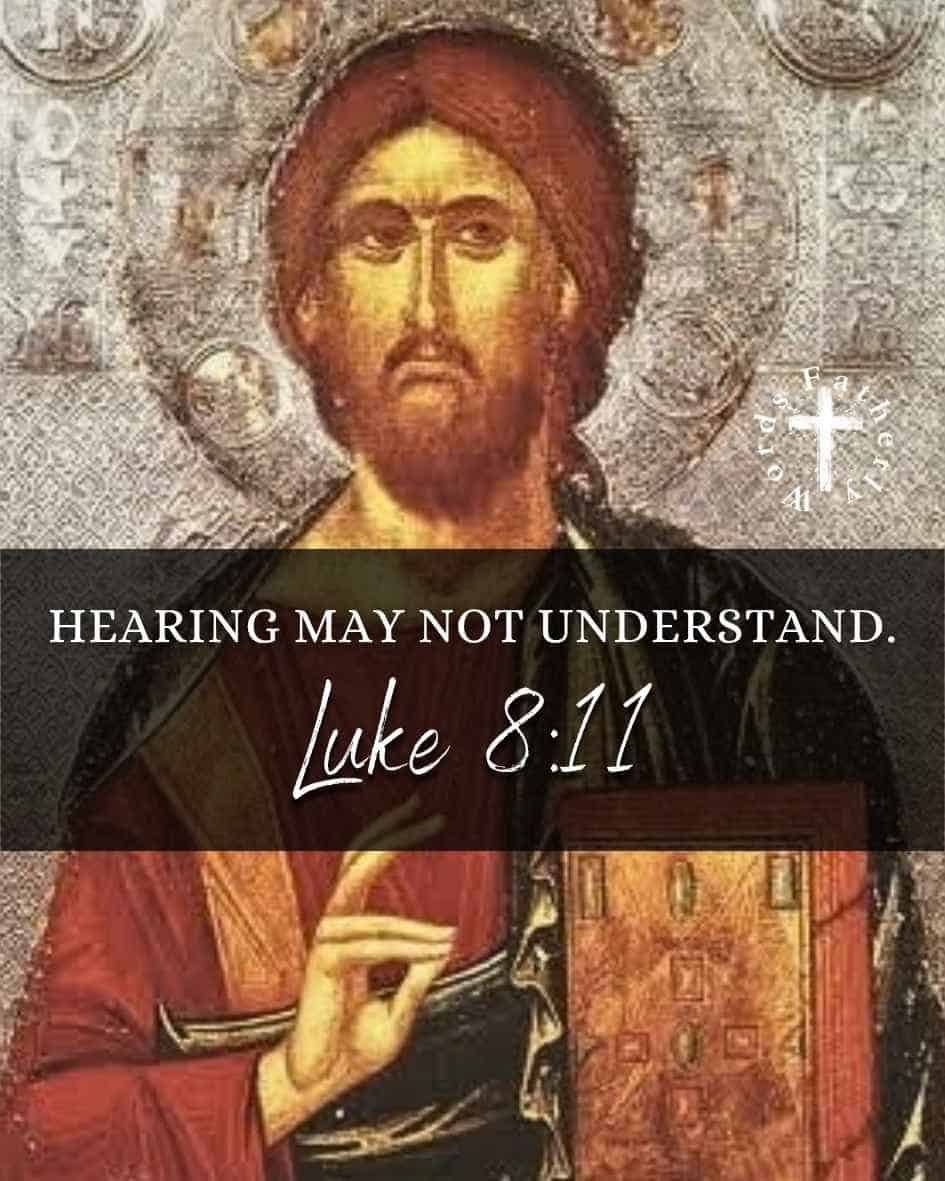
Luke 8:41–56 Gospel Reading: Jairus’ Daughter and the Woman with the Issue of Blood
The full reading:
[41] And behold there came a man whose name was Jairus, and he was a ruler of the synagogue: and he fell down at the feet of Jesus, beseeching him that he would come into his house:
[42] For he had an only daughter, almost twelve years old, and she was dying. And it happened as he went, that he was thronged by the multitudes.
[43] And there was a certain woman having an issue of blood twelve years, who had bestowed all her substance on physicians, and could not be healed by any.
[44] She came behind him, and touched the hem of his garment; and immediately the issue of her blood stopped.
[45] And Jesus said: Who is it that touched me? And all denying, Peter and they that were with him said: Master, the multitudes throng and press thee, and dost thou say, Who touched me?
[46] And Jesus said: Somebody hath touched me; for I know that virtue is gone out from me.
[47] And the woman seeing that she was not hid, came trembling, and fell down before his feet, and declared before all the people for what cause she had touched him, and how she was immediately healed.
[48] But he said to her: Daughter, thy faith hath made thee whole; go thy way in peace.
[49] As he was yet speaking, there cometh one to the ruler of the synagogue, saying to him: Thy daughter is dead, trouble him not.
[50] And Jesus hearing this word, answered the father of the maid: Fear not; believe only, and she shall be safe.
[51] And when he was come to the house, he suffered not any man to go in with him, but Peter and James and John, and the father and mother of the maiden.
[52] And all wept and mourned for her. But he said: Weep not; the maid is not dead, but sleepeth.
[53] And they laughed him to scorn, knowing that she was dead.
[54] But he taking her by the hand, cried out, saying: Maid, arise.
[55] And her spirit returned, and she arose immediately. And he bid them give her to eat.
[56] And her parents were astonished, but he charged them to tell no one what had happened.
Luke 8:41–56 Summary: Two Daughters, Twelve Years, and One Interrupted Journey
Jairus is a ruler of the synagogue, a respected leader in his town, yet he falls at the feet of Jesus. His only daughter is almost twelve and dying. The crowd presses so hard that Jesus can barely move.
In that crush stands a woman who has suffered for twelve years and spent everything on physicians. One girl has lived twelve years. One woman has been ill for twelve. Neither can be helped by anyone but Christ.
Luke builds the story as a miracle inside a miracle.
The woman touches the hem and is healed. While Jesus is still speaking to her, the news comes that the girl is dead. Jesus tells Jairus to fear not and believe only, enters the house with the parents and three disciples, takes the girl by the hand, and she rises and eats.
The same chapter of Luke shows Christ’s command over a storm, over a legion of demons, over long illness, and finally over death. Matthew 9:18–26 and Mark 5:21–43 tell the same events with some different details.
Why Did Jesus Delay? The Orthodox Answer to Jairus’ Painful Wait
Jairus did not ask for a conversation. His daughter was dying, and each minute counted. Yet Jesus gave the crowd, and then one unnamed woman, all the time they needed. By the time the messenger said, “Thy daughter is dead, trouble him not,” the delay had cost, humanly speaking, everything.
Saint John Chrysostom does not soften this. He says Christ moved slowly and drew out His conversation with the woman so that the girl would die in the meantime and messengers would come to announce it. Christ wanted her death established beyond argument, because a resurrection can only be believed if the death was real.
The Lord did the same with Lazarus: He stayed where He was for two more days and arrived when Lazarus had lain in the tomb four days (John 11:6, 11:17).
The delay was not neglect. Christ is not the author of death. He came to destroy it, and He lets it be fully seen so that its defeat can be fully seen. Nothing in Luke 8:41–56 happens too late for Him, because He is Lord of the hour of death and the hour of life.
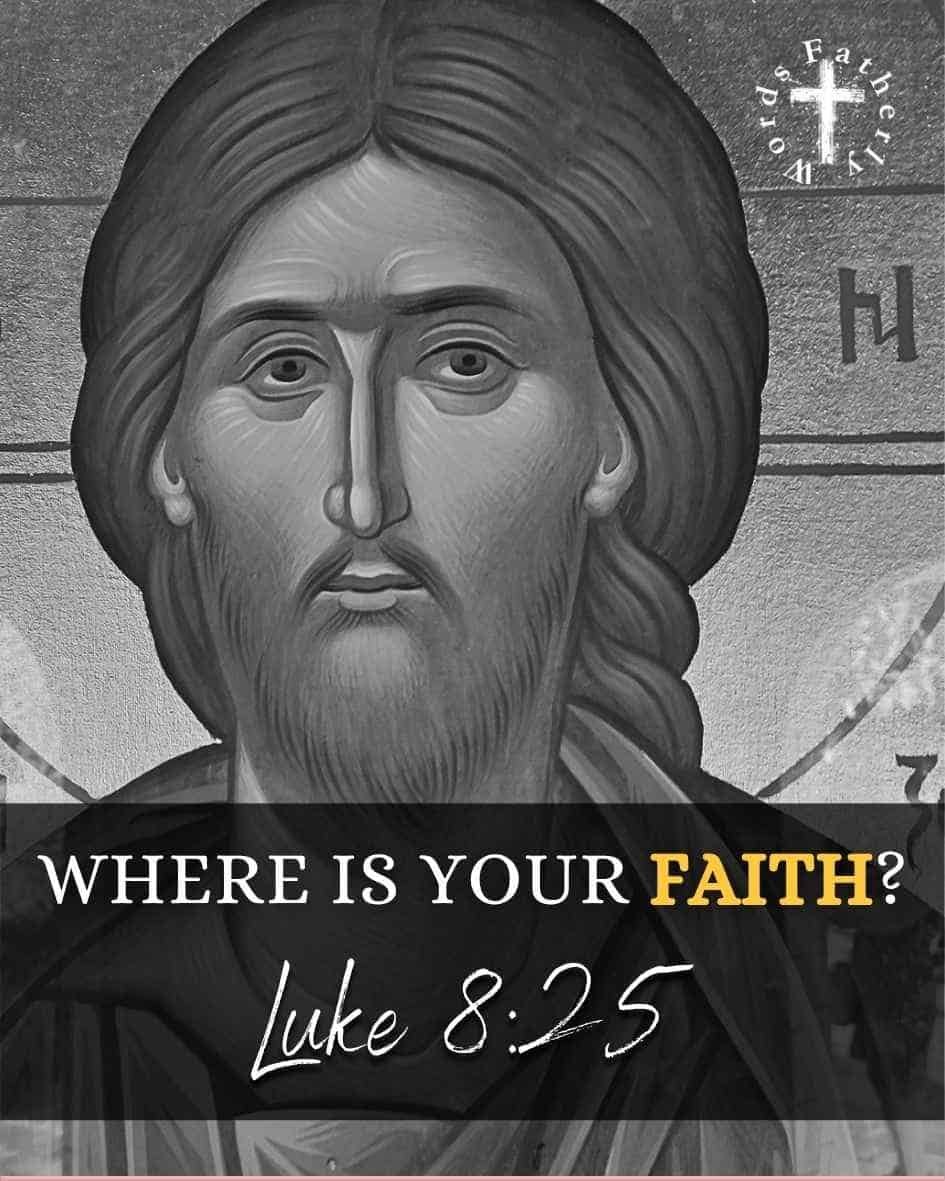
Look at the scene through Jairus’ eyes. He had asked for one thing, and the Lord stopped for a stranger. He stood there while his daughter slipped away, and he did not rush Christ. Then the news came. Imagine the face of Jesus at that moment: steady, unhurried, certain. He spoke two short commands: “Fear not; believe only, and she shall be safe.” The fear was Jairus’ to put down. The belief was all Christ asked him to carry.
Why does Christ still seem slow today?
Saint Nikolai Velimirovich gives a picture. The road Christ walks is hard and narrow, with fallen sinners lying in the ditch on both sides. He has to bend to one side, then the other, lifting them up and drawing them behind Him as He moves forward. That is why He walks slowly. Some of the pauses that feel like silence to us may be Christ bending to lift someone, and that someone may be us.
The Orthodox reasons for the pause come down to three:
- The death had to be certain. A resurrection means nothing if the death can be doubted.
- Faith had to be strengthened. Through the woman’s healing, Christ steadied a father who was about to hear the worst.
- The disciples had to be prepared. Christ was about to die Himself, and miracles on the bodies of others taught His followers to face death with courage.
Why Did Jesus Ask “Who Touched Me?” The Healing of the Woman with the Issue of Blood
The woman in this story is nearly invisible. She comes from behind, through the crowd, with no request and no name.
Saint John Chrysostom explains why. Under the Law of Moses her illness made her ritually unclean (Leviticus 15), so shame kept her hidden.
She had spent all her substance on physicians, and she had heard that Christ heals women too. She did not dare to invite Him into her home, even though she had once been wealthy, and she did not come to Him openly. As Matthew records, she told herself that a touch alone would be enough.
Then comes the moment that seems unnecessary. She touches the hem, and her bleeding stops at once. Jesus halts the whole procession and asks, “Who is it that touched me?”
Peter points out the obvious: the multitudes throng and press Him. Jesus insists that somebody touched Him, “for I know that virtue is gone out from me.” The power that went out is the Lord’s own divine power, which is never diminished by giving.
Why ask a question He already knew the answer to?
He did the same with Moses, asking “What is that in thine hand?” before the rod became a serpent, and at the tomb of Lazarus, asking “Where have ye laid him?” before the stone was moved. Christ asks so that people will remember the plain facts when the miracle arrives.
Saint John Chrysostom gives four reasons for this particular question, and each one is a lesson:
- To free her from fear. She may have felt she had stolen her healing, and her conscience would have tormented her. Christ brings her into the open so that she can live without dread.
- To correct her thought. She believed she had escaped His notice. A healing built on a wrong idea of God is not yet complete.
- To reveal her faith. Others could imitate it. Stopping the flow of blood was one miracle, and showing that He knows every heart was another.
- To hold Jairus in the faith. The messengers were about to say his daughter was dead. Through this woman, Christ was already teaching him that nothing is beyond hope.
Some say He did this out of love for glory. Chrysostom answers sharply: the One who commands the healed to keep silent, and lets countless miracles pass unnoticed, is not hunting for glory. Without this moment the woman would have slipped away unpraised. Christ acted to correct and strengthen others, not to exalt Himself.
Peter’s protest carries another lesson. The crowd pressed against Christ on every side, yet only one person received power. Chrysostom points out that the crush shows He had a real body and no pride: people did not follow from a distance but pressed in around Him. Many touched Him. One touched Him in faith.
The woman, trembling, then falls at His feet and tells everything before all the people. Christ answers her fear with a name: “Daughter.” Chrysostom notes that He calls her daughter because her faith had made her one, and that if He had wanted display, He would never have added the praise, “thy faith hath made thee whole.” His last words, “go thy way in peace,” give her more than a healthy body. That peace is a soul without shame.
Orthodox Christians still reach for Christ this way. We kiss His icon, we stand before His holy face in prayer, and we receive His Body and Blood, because He still heals through what is touched in faith, and the honor given to His icon passes to Him. The Lord who searched a crowd for one trembling hand looks out from the Christ Pantocrator of Saint Catherine’s Monastery, a sixth-century icon preserved on Mount Sinai, with one side of His face stern and the other tender.
Our canvas of this icon, one of the oldest Byzantine religious icons in existence, is the original gift that makes a lasting difference for faithful Christians, and the code WELCOME-10 gives you 10% off.

The Faith of the Woman and the Faith of Jairus: Why Christ Welcomes Weak Faith
Saint John Chrysostom asks the question many readers avoid: who believed more, the ruler or the woman?
He answers that the woman did. She did not seize Christ or ask Him to come to her home. She touched Him with the tips of her fingers, arrived last, and left first, healed. Twelve years of illness had not crushed her hope.
Jairus asked for two things: that Christ come to his house, and that He lay a hand on the girl. Chrysostom sees in this the weaker faith that needs the Lord’s bodily presence and a visible sign.
What is striking is that Christ never scolds Jairus. He gives him a teacher in the woman, and then gives him the shortest creed in the Gospel: “Fear not; believe only.”
The faith He asks for is not perfect faith but faith that keeps walking. Jairus kept walking after the news, and that was enough to bring him to the house where his daughter lay.
The crowd shows a third kind of faith. Chrysostom notes that many followed Christ that day expecting a great miracle, and most of them cared more for the healing of the body than for the health of the soul. Some came because of their own sicknesses, others to watch the sick being healed, and few came to hear His words. Christ did not let them into the house.
Weak faith is not rejected faith. Christ meets a trembling woman and a shaking father where they stand, and He leads them forward.
“She Is Not Dead, but Sleepeth”: What Luke 8:52 Means in Orthodox Teaching on Death
When Jesus reached the house, the noise had already begun. Luke writes: “And all wept and mourned for her.
But he said: Weep not; the maid is not dead, but sleepeth. And they laughed him to scorn, knowing that she was dead.”
Chrysostom notes that the mourners were building the case for the miracle themselves. Matthew’s account mentions flute players and a noisy crowd, and Chrysostom remarks, with some irony, that the synagogue rulers had provided fine proofs: pipes and cymbals raising a dirge at the very moment of death.
Christ did not argue with them and did not scold them for laughing. Their laughter became a witness, because no one could claim the girl had not really died.
Why “sleep”?
The Lord used the same word for Lazarus: “Our friend Lazarus sleepeth; but I go, that I may awake him out of sleep” (John 11:11).
For Christ, raising the dead is as easy as waking someone from bed. Chrysostom says that from the time the Lord came into the world, death has become sleep.
This is the heart of Orthodox teaching on death.
Death is real, painful, and an enemy that entered the world through the fall. But it is no longer final. Christ went down into death and rose, and He says, “I am the resurrection, and the life” (John 11:25).
This is why the Church prays for the departed at funerals and memorial services, and why Saint Paul tells the Thessalonians not to grieve as those who have no hope (1 Thessalonians 4:13).
One clarification matters. “Sleep” does not mean that the soul becomes unconscious. The word describes the body at rest, waiting to be awakened at the resurrection. Luke’s detail in verse 55, “her spirit returned,” points the same way: Chrysostom stresses that Christ did not place another soul in the body but called back the very one that had departed. The girl who rose was the same girl.
Chrysostom brings this lesson to the mourners of his own day. That girl rose and later died again, he says, but those raised at the final resurrection will never die again. He scolds believers who copied pagan funeral customs, even bringing in wailing women, when Christ had already turned death into sleep. Pagans comfort themselves by saying that what is done cannot be undone. A Christian says that the one who sleeps will surely rise.
This is not a ban on tears. Christ Himself wept at the tomb of Lazarus (John 11:35). The Church mourns, but its mourning is filled with hope.
The Psalm Chrysostom recalls says it well: the soul is told to return to its rest, because the Lord has dealt kindly with it (Psalm 114:7 in the Orthodox numbering). Life here is full of sorrow, and Christ warned that in the world we shall have tribulation (John 16:33). Isaiah promises a life where pain, sorrow, and sighing flee away (Isaiah 35:10).
Why Did Jesus Take Only Peter, James, and John? Hidden Details in Luke 8:51–56
Every detail in the room is deliberate.
The three disciples. Luke names Peter, James, and John, and Mark does too. Matthew says only “disciples.” Chrysostom asks why Matthew himself, newly called, was not taken, and answers that it was to awaken a deeper longing in him, since he was still imperfect. By honoring three, Christ also gave the rest something to strive for.
The closed door. Christ sent out the crowd and the mourners and kept only the parents and three disciples. Chrysostom says this teaches us to avoid the praise that comes from people, and that the mourners were not worthy to see such a miracle. Interpreters add that the miracle proclaimed Christ as Lord of life and death, which would have stirred the envy of His enemies before His hour.
The hand. Jairus had asked Christ to lay a hand on his daughter. Christ does more. He takes her by the hand and says, “Maid, arise.” Chrysostom notes that this shows His readiness to raise her and proves that all things are possible to Him.
The food. “And he bid them give her to eat.” A phantom does not eat, so the command removed any thought of illusion. Christ also does not feed her Himself but tells the family to do it, as with Lazarus, when He told them to loose him and let him go (John 11:44).
The silence. The parents are told to tell no one. Chrysostom asks the reader to look beyond the resurrection to this command, and to learn from it the Lord’s humility and His flight from vainglory.
Where we stand. Chrysostom turns the scene into advice for every mourner: do not go out with the flute players, but stay with Peter, John, and James. In loss, stay close to the Church and its prayers, not to the noise of a world that has no answer to death.
What Luke 8:41–56 Teaches Us Today: How to Trust God When He Seems Late
Delay is not denial. Jairus heard “trouble him not” from human voices, then “Fear not; believe only” from the Lord. When prayer feels unanswered, keep walking beside Christ. Keep praying, keep going to the Divine Liturgy, and keep saying the Jesus Prayer: Lord Jesus Christ, Son of God, have mercy on me.
Bring your hidden wound into the light. The woman bled in secret for twelve years because of shame. Christ drew her out, not to expose her, but to heal her fear and give her peace. This is the pattern of Confession in the Orthodox Church: you stand before Christ, with the priest as witness, and what you confess, Christ forgives. Do not wait twelve years.
Never write anyone off. The people in the house had decided the matter and laughed at hope. Christ did not accept their verdict. If someone you love seems beyond reach, a child far from the Church or a friend trapped in addiction, keep praying and keep loving with patient, sacrificial love. What is impossible with men is possible with God (Luke 18:27). Sometimes the change comes in a moment, as it did here, and sometimes it takes years of endurance.
Grieve with hope. Pray for your departed, attend the memorial services, and let the tears come. When you speak to children about death, tell them that Christ will wake all who sleep.
Live with eternity in view. Our years on earth are a short episode before eternity. Because Christ is the resurrection and the life, we have no right to tremble before death as people without hope. Let that change small things: forgive today, confess soon, and do not delay a reconciliation you know you owe.
Do good quietly. The Lord told the parents to keep silent. Give alms, visit the sick, and help your neighbor without announcing it, and let Christ be the only one who sees.
Anxiety is Jairus’ fear in modern dress, and the Lord’s answer is the same: fear not, believe only. We have gathered the specific Psalms of David and the prayers of Saint Arsenios of Cappadocia that steady an anxious mind into a free ebook, and the form on this page will send it straight to your inbox.
Luke 8:41–56 FAQ: Jairus’ Daughter, the Woman with the Issue of Blood, and Orthodox Teaching
Why did Jesus delay going to Jairus’ house?
Because He was not late. Saint John Chrysostom explains that Christ waited for the girl’s death to become certain so that no one could doubt the resurrection, and used the pause to strengthen Jairus’ faith through the woman’s healing. The same pattern appears with Lazarus.
Why did Jesus say the girl was sleeping, not dead?
In the Lord’s mouth, death is a sleep that He will end. He said the same of Lazarus. The word does not mean the soul is unconscious. It means the body rests until the resurrection, and that for Christ raising the dead is as simple as waking someone.
Did Jesus really not know who touched Him?
He knew. Chrysostom says He asked so that the woman would come forward by herself, lose her fear, and show her faith to all. Christ often asks questions He knows the answer to, as He did with Moses and at the tomb of Lazarus.
Why does Matthew say the girl had just died when Luke says she was dying?
Chrysostom suggests that Jairus’ words in Matthew came from the thoughts he had while walking to Jesus, or that he made his grief sound heavier to win sympathy, as people in distress often do.
Why did Jesus tell the parents to tell no one?
Chrysostom points to the Lord’s humility and flight from vainglory. Interpreters add that the miracle proclaimed Christ as master of death, which would have stirred the envy of His enemies too soon.
Why did Jesus ask them to give her something to eat?
To prove the miracle was real and not an illusion. Only a living person eats.
Did Jairus’ daughter die again?
Yes. Chrysostom says she rose and later died, but those who rise at the final resurrection will remain immortal. Her raising was a sign of what Christ will do for all.
When is Luke 8:41–56 read in the Orthodox Church?
On the Seventh Sunday of Luke in the Byzantine (Greek) lectionary. The date changes each year, but the reading stays the same.
Luke 8:41–56 in Summary: Christ Is Never Late
Jairus received his daughter back. The woman received a name and peace. The mourners received a witness they could not argue with. Christ was late for none of them. The only thing He asked in return was the thing He still asks of us when the news is worst: fear not, believe only.
