
In the closed room of Luke 8:41–56, only two parents and three disciples stand beside a dead child. Every family that loses someone stands in a room like it.
The Orthodox Church does not meet death with silence or with slogans. She meets it with prayer: prayers at the deathbed, at the funeral, at the grave, and again on the third, ninth, and fortieth days, at one year, and on every anniversary after.
This article explains what the Church teaches about the soul after death, why Orthodox Christians pray for the departed, and what to do when someone you love dies.
For the verse-by-verse meaning of the Gospel itself, read our Luke 8:41–56 commentary on why Jesus delayed.
Luke 8:41–56 Gospel Reading on Death and Resurrection
The full reading, with verse numbers:
[41] And behold there came a man whose name was Jairus, and he was a ruler of the synagogue: and he fell down at the feet of Jesus, beseeching him that he would come into his house:
[42] For he had an only daughter, almost twelve years old, and she was dying. And it happened as he went, that he was thronged by the multitudes.
[43] And there was a certain woman having an issue of blood twelve years, who had bestowed all her substance on physicians, and could not be healed by any.
[44] She came behind him, and touched the hem of his garment; and immediately the issue of her blood stopped.
[45] And Jesus said: Who is it that touched me? And all denying, Peter and they that were with him said: Master, the multitudes throng and press thee, and dost thou say, Who touched me?
[46] And Jesus said: Somebody hath touched me; for I know that virtue is gone out from me.
[47] And the woman seeing that she was not hid, came trembling, and fell down before his feet, and declared before all the people for what cause she had touched him, and how she was immediately healed.
[48] But he said to her: Daughter, thy faith hath made thee whole; go thy way in peace.
[49] As he was yet speaking, there cometh one to the ruler of the synagogue, saying to him: Thy daughter is dead, trouble him not.
[50] And Jesus hearing this word, answered the father of the maid: Fear not; believe only, and she shall be safe.
[51] And when he was come to the house, he suffered not any man to go in with him, but Peter and James and John, and the father and mother of the maiden.
[52] And all wept and mourned for her. But he said: Weep not; the maid is not dead, but sleepeth.
[53] And they laughed him to scorn, knowing that she was dead.
[54] But he taking her by the hand, cried out, saying: Maid, arise.
[55] And her spirit returned, and she arose immediately. And he bid them give her to eat.
[56] And her parents were astonished, but he charged them to tell no one what had happened.
What Happens After Death? The Orthodox Teaching on the Soul
Orthodox Christians believe that death is an intruder. God made human beings for life, and Saint Paul calls death the last enemy that will be destroyed (1 Corinthians 15:26). At death the soul separates from the body, but the person does not cease to exist.
The Gospel shows the departed alive. In Luke 16:19–31 the rich man and Lazarus both speak, feel, and remember after death.
To the repentant thief on the cross Christ says, “To day shalt thou be with me in paradise” (Luke 23:43). When the Sadducees deny the resurrection, Christ answers that God is “not a God of the dead, but of the living: for all live unto him” (Luke 20:38).
The Church teaches that after death each soul receives a foretaste of what is to come, joy in the presence of God or sorrow in separation from Him. “It is appointed unto men once to die, but after this the judgment,” writes the Epistle to the Hebrews (9:27), and the final judgment comes at Christ’s return, when soul and body are joined again.
Beyond this the Church is modest. She does not give a detailed map of the afterlife, and she does not teach purgatory. She teaches that the departed are in God’s hands and that prayer helps them.
The Church also teaches this in color. In the Orthodox icon of the Resurrection, Christ stands on the broken gates of Hades and grasps Adam and Eve by the hand, lifting them out of their tombs.
It is the same gesture as in verse 54 of our Gospel, when He takes the girl by the hand. The One who raised her at her bedside raised Adam, and He will raise all.
Why Do Orthodox Christians Pray for the Departed?
Because love does not end at the grave. The Church is one body of the living and the departed, and Christ is the God of both. Hebrews speaks of a “cloud of witnesses” around us (Hebrews 12:1), and the Church believes that those who have died in Christ remain members of His family.
Praying for the departed is also very old. In Second Maccabees, which the Orthodox Church receives in its Old Testament, Judas Maccabeus arranges an offering for fallen soldiers, and Scripture praises him for acting rightly because he was mindful of the resurrection (2 Maccabees 12:43–45).
Saint John Chrysostom teaches that the Apostles themselves ordained that the departed be remembered during the Divine Liturgy, because they knew how much benefit comes to them.
This is why the names of the departed are lifted up at the Divine Liturgy, why we say their names in our daily prayers, and why almsgiving in their memory is a traditional Orthodox practice.
We do not claim to know where a soul stands before God. We ask for mercy, and we trust that the Lord, who is more merciful than we are, hears.
Orthodox Memorial Services: The 3rd Day, 9th Day, 40th Day, and One-Year Memorial
The Church’s prayers for a departed person follow a pattern. Soon after death and at the wake, a short Trisagion service is chanted. The funeral service is held in the church, and the Trisagion is repeated at the grave.
Memorial prayers then continue on set days. Parishes and families differ in the details, so speak with your priest, but the common pattern is the third day, the ninth day, the fortieth day, three, six, and nine months, one year, and then each year after.
Saint Symeon of Thessaloniki explains the meaning of the days:
- The third day honors the Holy Trinity and the three days of Christ in the tomb, with the hope that the departed will be restored to the beauty humanity had before the fall.
- The ninth day remembers the nine orders of angels, with the prayer that the departed will dwell among the holy angels.
- The fortieth day remembers Christ’s Ascension forty days after His Resurrection, with the hope that at the resurrection the departed will be taken up to meet the Lord and be with Him forever (1 Thessalonians 4:17).
Beyond personal anniversaries, the whole Church remembers every departed soul on the Saturdays of Souls, especially the Saturday before Meatfare Sunday and the Saturday before Pentecost.
At memorial services the family brings koliva, boiled wheat sweetened and decorated, to be blessed. Saint Symeon explains that man is like a seed: he is placed in the earth now and will be raised up and blossom by God’s power.
Christ said the same of Himself, that unless a grain of wheat falls into the ground and dies it remains alone, but if it dies it bears much fruit (John 12:24).
The koliva is set before an icon of Christ and shared with all after the service, because every prayer for the departed is finally addressed to Him. No icon holds Judge and Savior together like the Christ Pantocrator of Saint Catherine’s Monastery, one of the oldest Byzantine icons, painted in the sixth century and preserved on Mount Sinai, where one side of His face is stern and the other tender.
Our canvas of this icon is the perfect original gift for faithful Christians and makes a lasting difference in a home prayer corner, and the code WELCOME-10 gives you 10% off.

Preparing for Death in the Orthodox Church: Confession, Holy Unction, and Holy Communion
The Church does not wait for the last breath. When an illness becomes serious, call your priest early, so that the sacraments can be received with a clear mind.
- Confession. The sick person lays down every burden and receives forgiveness.
- Holy Unction. Following James 5:14–15, the priests pray over the sick and anoint them with oil. This sacrament is for the healing of soul and body, and it is not reserved for the dying.
- Holy Communion. The Church gives the sick and the dying the Body and Blood of Christ for the forgiveness of sins and life everlasting.
- Forgiveness. Ask for it and give it while there is still time to speak.
Preparation continues while we are healthy. At every Divine Liturgy the Church asks for a Christian ending to our life, painless, blameless, and peaceful, and a good defense before the awesome judgment seat of Christ.
Few anxieties weigh on the heart like the fear of dying and of losing the people we love. We gathered specific Psalms of David and the prayers of Saint Arsenios of Cappadocia that calm that fear into a free ebook, and the form on this page will send it straight to your inbox.
How to Comfort a Grieving Orthodox Family
Grief is longest after the funeral ends. These small acts matter most:
- Come. Attend the Trisagion at the wake and the funeral. Presence says more than words.
- Skip the slogans. Orthodox hope is firm, but we do not claim to know the final state of any soul. Say “I will pray for him” or “May his memory be eternal” instead of “he is in a better place.”
- Give the name to the priest. Ask that the departed be commemorated at the Divine Liturgy.
- Give alms in memory. Feeding the poor or supporting the parish in the name of the departed is prayer in action.
- Remember the dates. Call the family on the fortieth day, at six months, and on the anniversary. Others forget, and they will not.
- Help in practical ways. Bring meals, drive relatives, and watch the children.
Orthodox Teaching on Death FAQ: Memorials, Koliva, and Prayers for the Departed
What does the Orthodox Church teach happens after death?
The soul separates from the body and continues to live. Each soul receives a foretaste of the final judgment, and the body awaits the resurrection at Christ’s return. The Church prays for the departed and does not claim to know any soul’s final state.
Why are Orthodox memorial services held on the 3rd, 9th, and 40th days?
Saint Symeon of Thessaloniki links them to the Trinity and the three days in the tomb, the nine orders of angels, and Christ’s Ascension on the fortieth day. Families may also hold services at three, six, and nine months and at one year.
What is koliva and who prepares it?
Koliva is boiled wheat, usually mixed with sugar, spices, and nuts and often decorated. The family or a parishioner prepares it, the priest blesses it at the memorial, and everyone shares it afterward. It is a sign of the seed that dies and rises.
Do prayers for the dead really help them?
The Church teaches that they do. Saint John Chrysostom says the Apostles ordained the remembrance of the departed in the Divine Liturgy because of the benefit it brings them, and the Church has prayed this way from the earliest centuries. We entrust the result to God’s mercy.
Can Orthodox Christians be cremated?
The Church’s tradition is burial, because the body is honored and awaits the resurrection. Cremation is not the Church’s practice, and a family facing this question should speak with their priest early.
What do you say to an Orthodox family after a death?
Say that you are praying for them and for the departed. “May his memory be eternal” (or “her” or “their”) is the traditional wish. Add one concrete offer of help.
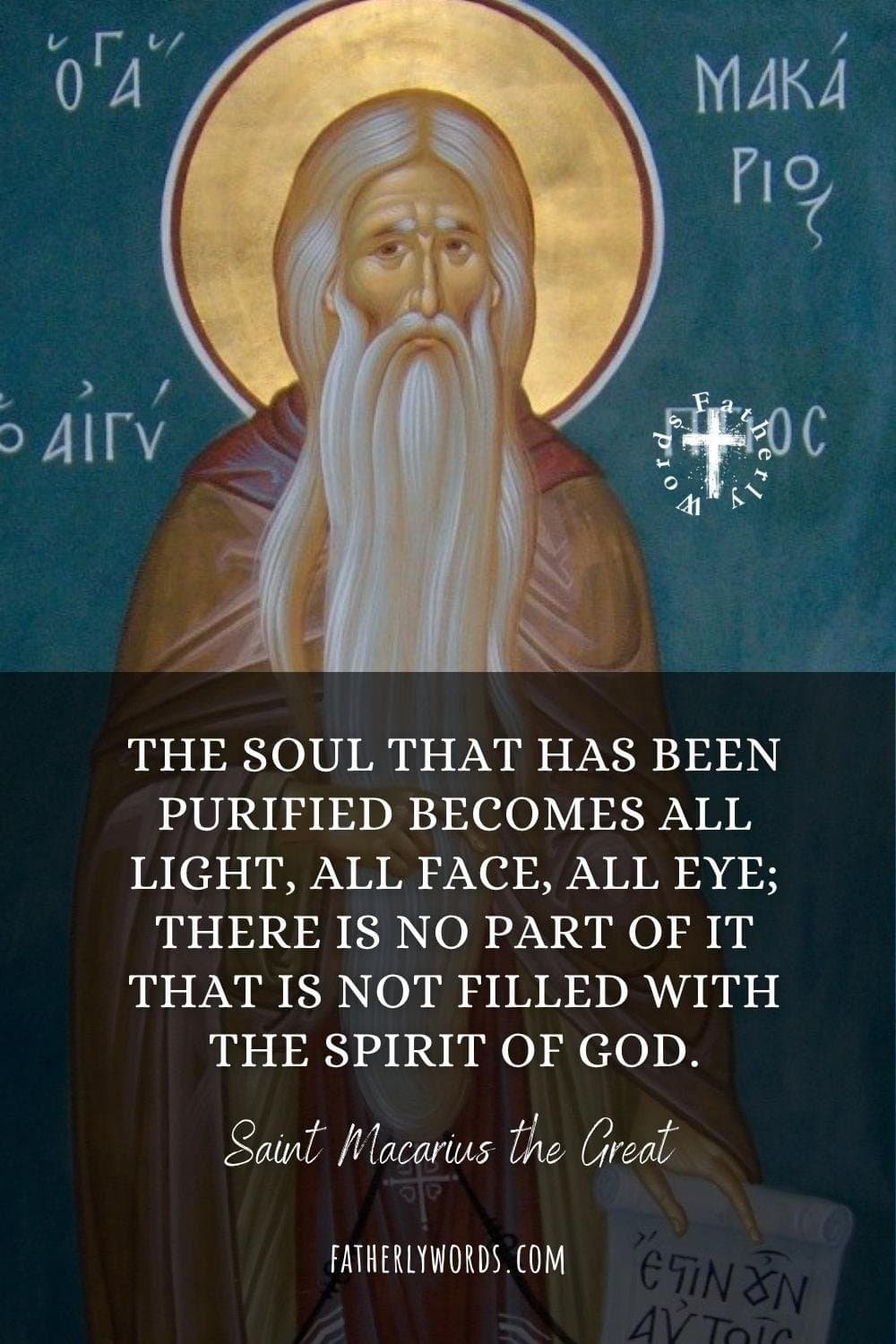
What is Memory Eternal?
Memory Eternal is the hymn sung at funerals and memorial services. It asks God to remember the departed forever, since to be remembered by God is to live in Him.
Luke 8:41–56 and Memory Eternal
Scripture says that the souls of the righteous are in the hand of God (Wisdom 3:1), and the hand that took a child’s hand in a closed room is that hand. Until the day He raises them, we do what the Church has always done: we remember our departed by name, and we pray.
